

Hybrid Work in 2026: Why Video Conferencing Is Essential for Collaboration and Productivity
Hayley Spooner, Jun 3, 2026
Key Takeaways
- Hybrid work has become the standard operating model for many organizations in 2026.
- Video conferencing is now a core business system that enables communication, collaboration, and productivity across distributed teams.
- Meeting equity is critical to ensuring remote and in-office employees can participate equally.
- Video conferencing powered by Artificial intelligence (AI) improves meeting quality through automation, transcription, intelligent framing, and audio optimization.
- Modern meeting rooms are designed as hybrid collaboration spaces that seamlessly connect remote and in-person participants.
- Organizations that invest in integrated video collaboration solutions benefit from improved productivity, employee engagement, and operational efficiency.
- Sustainability goals are increasingly supported by hybrid work through reduced travel and more efficient workplace technology.
Hybrid work is no longer an emerging trend. In 2026, it has become a standard operating model for many organizations, shaping how teams collaborate, communicate, and make decisions. Employees now expect flexibility in where they work, while organizations need to maintain alignment, productivity, and connection across distributed teams.
This shift has placed new demands on workplace technology. It is no longer enough to provide basic communication tools. Organizations must create environments where collaboration happens naturally, regardless of location. Video conferencing has become central to this transformation, evolving from a supporting tool into a core system that enables modern work.
What defines success in hybrid work today is not whether teams can connect, but how easily and effectively they can collaborate once connected.
Quick answer: Why video conferencing is critical for hybrid work
Video conferencing is essential for hybrid work because it enables real-time collaboration across locations, supports meeting equity between remote and in-office participants, integrates with business workflows, and reduces reliance on physical presence.
In 2026, video conferencing is not just a communication tool. It is the foundation of how hybrid organizations operate and scale.
What is hybrid work?
Hybrid work is a model where employees split their time between working remotely and working from a physical office. This approach provides flexibility while maintaining opportunities for in-person collaboration.
In practice, hybrid work introduces complexity. Teams are no longer in the same place at the same time, which changes how communication happens. Meetings must accommodate different environments, and collaboration must work across both physical and digital spaces.
This makes technology a critical enabler. Without the right systems, hybrid work can lead to fragmentation, miscommunication, and reduced engagement.
Key characteristics of hybrid work
| Element | Description | Impact |
| Distributed teams | Employees in different locations | Requires strong video collaboration |
| Flexible schedules | Work happens asynchronously | Increases need for recorded communication |
| Mixed environments | Office and remote participation | Requires consistent meeting experiences |
| Digital workflows | Work managed through tools | Needs deep integration |
Hybrid Work in 2026: Key statistics
- 74% of UK organisations now have a hybrid work policy in place, highlighting how hybrid work has become a mainstream operating model rather than a temporary workplace trend.
- 80% of workers say they lack enough time or energy to do their work effectively, while 53% of leaders say productivity must increase—creating growing demand for technologies that improve collaboration and efficiency.
- 78% of organisations reported using AI in 2024, according to the Stanford AI Index 2025, reflecting how rapidly AI-powered tools are becoming part of everyday business operations.
- 74% of UK hybrid employees report difficulties during hybrid meetings, including audio issues, missed visual cues, and technical delays, reinforcing the need for better collaboration technology and meeting experiences.
Why video conferencing sits at the center of hybrid work
Video conferencing has become the central layer that connects people, spaces, and workflows in hybrid environments. It is no longer just about enabling meetings—it is about enabling work.
Modern video systems allow teams to communicate visually, collaborate on content, and interact in real time, regardless of where they are located. This creates a shared environment where decisions can be made quickly and ideas can be developed collectively.
Companies that invest in high-quality video collaboration systems are better positioned to maintain alignment across distributed teams and reduce the friction that often comes with remote communication.
Role of video conferencing in hybrid work
| Function | Description | Outcome |
| Communication | Real-time interaction | Clear understanding |
| Collaboration | Shared tools and content | Better teamwork |
| Coordination | Aligning teams | Faster decisions |
| Integration | Connecting workflows | Continuous productivity |
Neat’s approach to hybrid work: Simplicity and intelligence
As hybrid work has evolved, so has the technology supporting it. Neat has focused on simplifying video collaboration while improving performance and flexibility.
Neat devices are built on an AI-powered architecture designed to make meetings feel natural and effortless. Rather than requiring users to manage technology, the system adapts automatically to participants and environments.
This includes intelligent audio and video capabilities that ensure participants are clearly seen and heard, whether they are in a small room, a large conference space, or joining remotely.
Neat’s approach reflects a broader shift in the industry. Video conferencing systems are no longer collections of components. They are unified platforms that combine hardware, software, and user experience into a single, cohesive system.
This shift reduces complexity and allows organizations to scale hybrid work more effectively.
Meeting equity becomes essential, not optional
One of the defining challenges of hybrid work is ensuring that all participants can contribute equally. This is where the concept of meeting equity becomes critical.
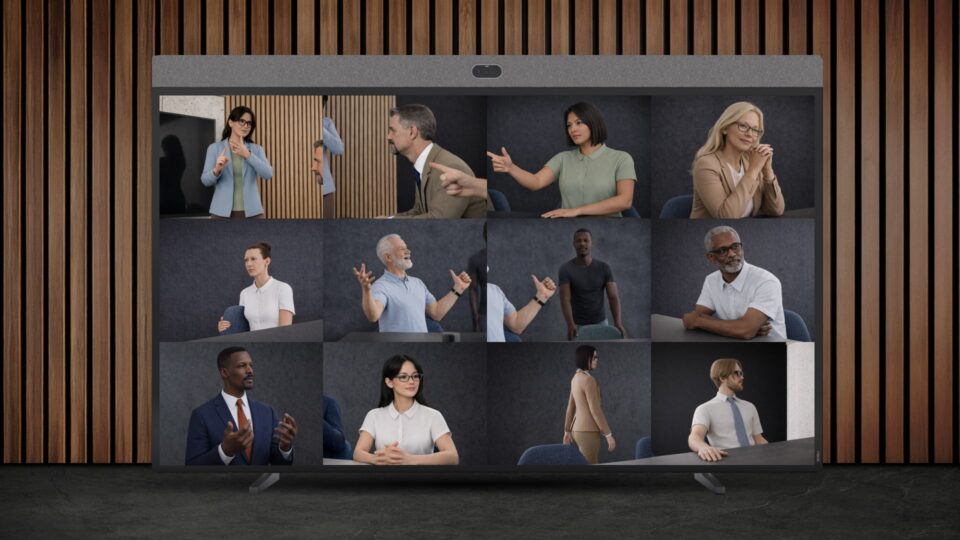
Meeting equity means that remote participants have the same ability to see, hear, and engage as those in the room. Without it, meetings become unbalanced, with in-room participants dominating discussions.
Neat addresses this by designing systems that capture the entire room and adapt to participant behavior. Features such as intelligent framing and distributed audio ensure that everyone is included in the conversation.
This creates a more inclusive environment and improves the overall quality of collaboration.
Meeting equity comparison
| Element | Without equity | With equity |
| Visibility | Limited for remote users | Equal for all |
| Audio | Inconsistent | Balanced |
| Participation | In-room dominant | Inclusive |
| Engagement | Lower | Higher |
AI transforms how meetings are experienced
Artificial intelligence is now deeply embedded in video conferencing systems. In 2026, AI is responsible for much of what makes meetings efficient and effective.
AI can automatically adjust camera views, balance audio across participants, and provide real-time transcription and summaries. It also enables features such as noise suppression and participant tracking, which improve clarity and engagement.
Neat has been at the forefront of this shift, using AI to simplify complex processes and create more natural meeting experiences.
The result is a system that works in the background, allowing participants to focus entirely on the conversation.
AI impact on video conferencing
| Capability | Traditional approach | AI-enabled approach |
| Notes | Manual | Automatic summaries |
| Audio/video | Static | Adaptive |
| Follow-ups | Manual | AI-assisted |
| Accessibility | Limited | Real-time captions |
Meeting rooms remain critical to hybrid work
Despite the growth of remote work, physical meeting rooms continue to play a central role in collaboration. However, their function has changed.
Meeting rooms are now hybrid spaces, designed to connect in-room and remote participants seamlessly. This requires systems that provide consistent audio and video quality, as well as intuitive controls.
Neat devices are designed to enable any space—from small rooms to large conference areas—with high-quality video collaboration.
By simplifying deployment and management, organizations can create consistent meeting experiences across all locations.
Real-world impact: Better collaboration and productivity
Organizations that adopt modern video conferencing systems see measurable improvements in how teams work.
Meetings start faster, run more smoothly, and require less technical support. Participants spend less time managing technology and more time collaborating.
Neat’s growth and recognition in the video collaboration market reflect this shift, as organizations increasingly prioritize simplicity, reliability, and performance in their meeting environments.
These improvements translate directly into productivity gains and better business outcomes.
Sustainability and efficiency in hybrid work
Hybrid work also supports sustainability by reducing the need for travel and optimizing how office spaces are used.
Neat devices contribute to this by combining multiple functions into a single system, reducing hardware complexity and energy usage. Some solutions also include environmental sensors that help monitor room conditions such as air quality and occupancy, supporting healthier and more efficient workplaces. We call this Neat Sense.
This combination of operational efficiency and environmental awareness is becoming increasingly important for organizations.
Sustainability impact
| Area | Traditional approach | Hybrid approach |
| Travel | Frequent | Reduced |
| Hardware | Multiple systems | Integrated devices |
| Operations | Complex | Streamlined |
How hybrid work systems come together
Hybrid work is successful when three elements are aligned: communication, environment, and workflow.
Video conferencing connects these elements into a single system. It enables communication, supports collaboration in physical spaces, and integrates with digital workflows.
Hybrid work system model
| Element | Role | Outcome |
| Video conferencing | Core communication layer | Connected teams |
| Meeting rooms | Physical collaboration spaces | Hybrid interaction |
| Integration | Workflow connection | Continuous productivity |
| AI | Automation and optimization | Efficiency |
Where Neat fits in
By now, it’s clear that successful hybrid work depends on more than simply giving employees the flexibility to work from different locations. Organizations need technology that creates consistent experiences across meeting rooms, home offices, and shared workspaces. They need solutions that support meeting equity, simplify collaboration, leverage AI effectively, and scale without adding complexity.
This is where Neat fits in.
Neat’s portfolio is built specifically for the realities of hybrid work, combining hardware, software, and AI-driven intelligence into a unified platform designed to make collaboration feel natural. Rather than requiring users to adapt to technology, Neat devices continuously adapt to the room, the participants, and the way people work.
Across the portfolio, Neat’s AI-powered architecture automatically adjusts audio and video based on room acoustics, lighting conditions, participant movement, and meeting activity. Intelligent people framing, noise suppression, voice enhancement, and automatic camera adjustments help ensure everyone is clearly seen and heard, regardless of where they are joining from.
For small meeting rooms and huddle spaces, Neat Bar and Neat Bar Generation 2 provide all-in-one video collaboration with advanced camera systems, intelligent audio processing, and integrated environmental sensors that can monitor room usage and conditions. These devices support Zoom, Microsoft Teams, Google Meet, and Bring Your Own Device (BYOD) workflows while remaining simple to deploy and manage.
For highly collaborative environments, Neat Board devices—including Neat Board 32, Neat Board 50, and Neat Board Pro—combine interactive touchscreens, video conferencing, digital whiteboarding, and content sharing into a single solution. This allows teams to move seamlessly between discussion, ideation, and presentation without switching between multiple tools or devices.
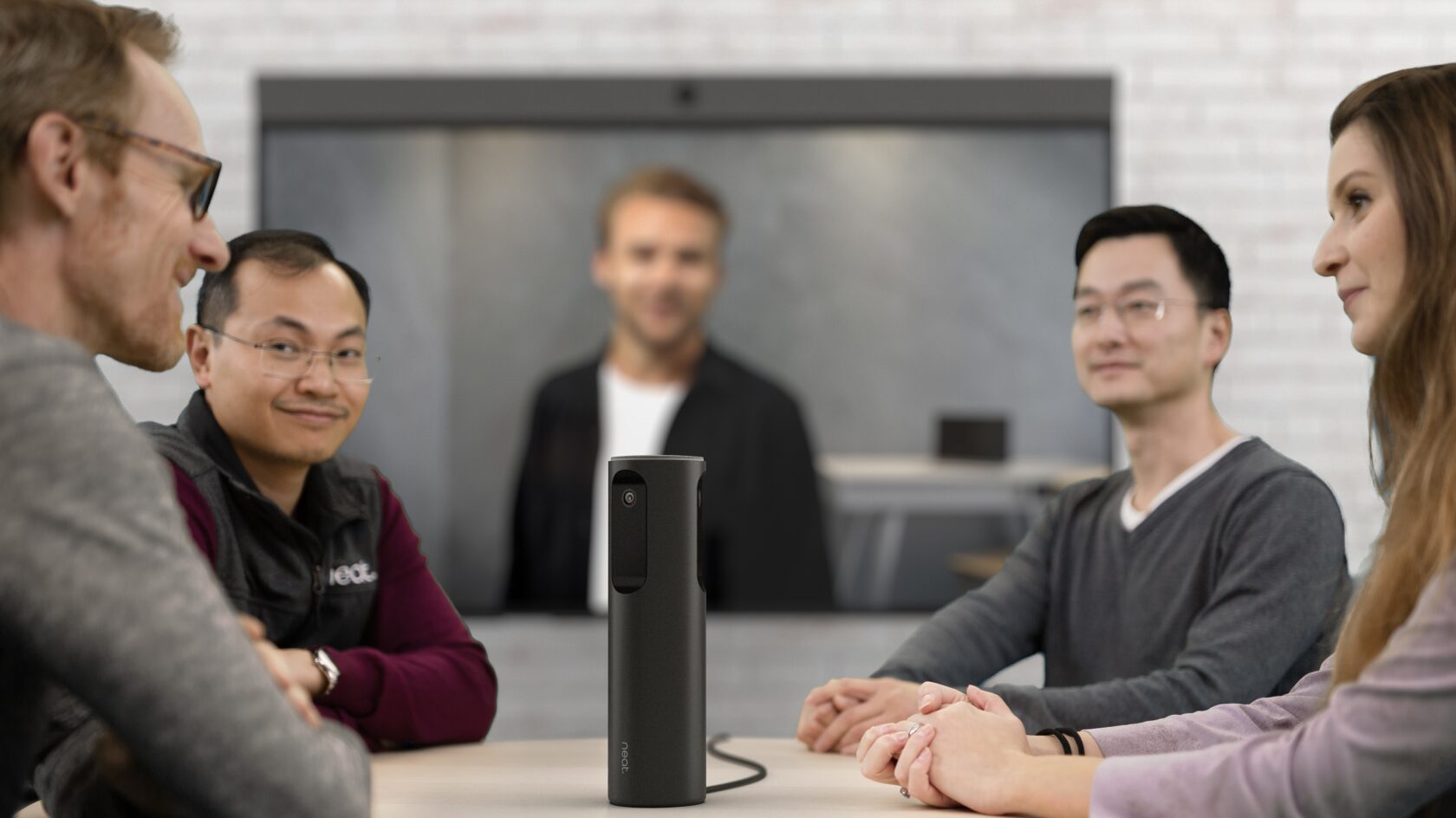
Meeting equity—a key theme throughout this article—is further enhanced by Neat Center. Designed as a companion device for medium and large spaces, Neat Center uses three cameras to provide a 360-degree view of the room alongside a 16-microphone beamforming array. Remote participants can see and hear everyone more clearly, even when people are seated away from the primary device or engaged in discussions around the room. The system automatically switches audio sources and intelligently frames participants to create a more inclusive experience for everyone involved.
Beyond the meeting room itself, Neat Pulse provides centralized management, monitoring, software updates, analytics, and device control across an organization’s deployment. This allows IT teams to maintain consistency, visibility, and security while scaling hybrid work environments globally.
The result is a video collaboration ecosystem designed around the principles that matter most in hybrid work: simplicity, inclusivity, flexibility, and intelligence. As organizations continue to refine how teams work together across locations, Neat helps remove the friction that often stands in the way of effective collaboration.
In a world where hybrid work is the norm, Neat enables organizations to create meeting experiences that feel connected, equitable, and effortless—regardless of where people choose to work.
Discover Neat’s pioneering devices or book a demo and experience them for yourself.
Frequently asked questions
Why is video conferencing essential for hybrid work?
It enables real-time collaboration, supports distributed teams, and connects meetings directly to workflows.
What is meeting equity?
Meeting equity ensures that all participants, regardless of location, can contribute equally.
How does Neat support hybrid work?
Neat provides integrated video collaboration devices that simplify meetings, improve audio and video quality, and create consistent experiences across spaces.
Will hybrid work continue in the future?
Yes. Hybrid work is now a long-term model supported by evolving technology and workplace expectations.
Sources
Hybrid Work Is Just Work. Are We Doing It Wrong?, Harvard Business Review
The Future of Work After COVID-19, McKinsey & Company
Global Human Capital Trends, Deloitte
The Anatomy of Work Index, Asana
Future of Jobs Report 2025, World Economic Forum
Latest Remote & Hybrid Work Statistics 2025, IT Desk UK
2025: The Year the Frontier Firm Is Born, Microsoft WorkLab
Artificial Intelligence Index Report 2025, Stanford Institute for Human-Centered Artificial Intelligence (HAI)