

Wfh vs Office Work: Finding the Right Balance for Modern Teams
Hayley Spooner, May 27, 2026
What is the difference between WFH and office work?
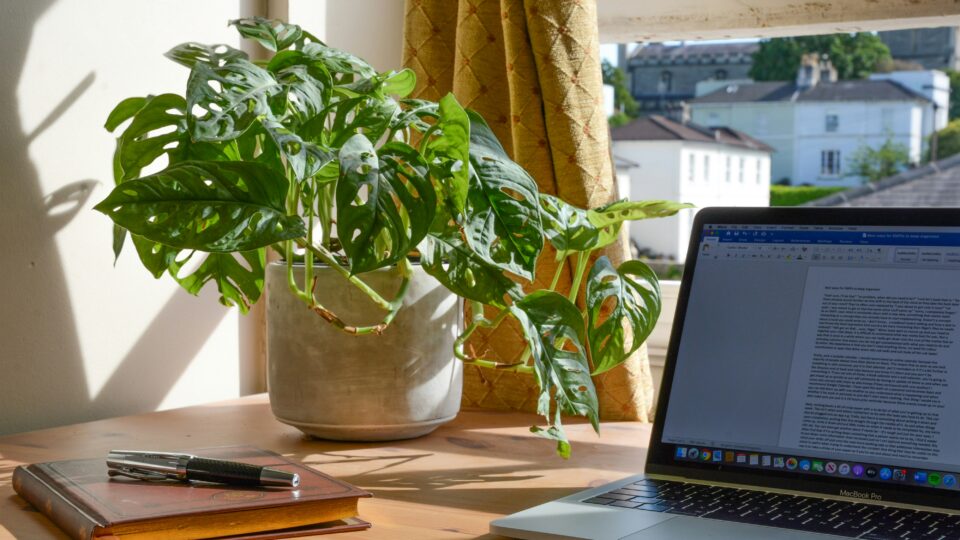
Working from home (WFH) means employees perform their job remotely using digital tools, while office work takes place in a shared physical workplace. Most organisations now use a hybrid model, combining both approaches to balance flexibility with collaboration.
The shift from “either/or” to hybrid work
The debate around working from home versus working in the office has changed significantly in recent years. What was once seen as a binary choice has evolved into something more flexible and intentional. Today, most organisations are no longer asking which is better. Instead, they are focused on how to combine both approaches in a way that supports productivity, wellbeing, and collaboration.
This shift reflects a broader transformation in how people think about work. Employees increasingly value flexibility and autonomy, while organisations still recognize the importance of in-person collaboration and culture. As a result, hybrid work has become the dominant model, combining the strengths of both environments.
Understanding the differences between WFH and office work
Working from home and working in an office each offer distinct advantages. Remote work allows people to control their environment, reduce commuting time, and build a better balance between work and personal life. This flexibility can improve wellbeing and help employees focus on individual tasks.
On the other hand, office work provides opportunities for spontaneous collaboration, stronger team relationships, and more structured routines. It can support mentoring, creativity, and faster decision-making, particularly when teams need to work closely together.
Rather than competing approaches, these two ways of working are complementary. The key is understanding when each works best.
WFH vs office work: Key differences
| Aspect | Working from home (WFH) | Office work |
| Productivity | Strong for focused, independent work | Strong for collaborative tasks |
| Flexibility | High autonomy and schedule control | More structured working day |
| Collaboration | Requires intentional communication | More natural, in-person interaction |
| Work-life balance | Improved for many employees | Clear separation of work and home |
| Culture | Harder to maintain organically | Easier to build shared culture |
The best choice between working from home and the office often depends on the type of work being done:
When to use WFH vs office work
| Situation | Best choice | Why it works |
| Deep, focused work | WFH | Fewer interruptions and more control over environment |
| Team brainstorming | Office | Easier to collaborate and build ideas together |
| One-to-one meetings | Either | Works well remotely or in person depending on context |
| Large team meetings | Hybrid | Allows flexibility while maintaining group interaction |
| Training and onboarding | Office or hybrid | Supports learning, mentoring, and connection |
| Routine admin tasks | WFH | Efficient and independent work |
| Culture-building activities | Office | Encourages relationships and team cohesion |
Why hybrid work is becoming the standard
Hybrid work has emerged as the preferred model because it combines the strengths of both environments. Employees can focus on deep work at home while using office time for collaboration, meetings, and team-building.
This approach supports better work-life balance while still maintaining strong team connections. It also allows organisations to adapt more easily to changing needs and gives employees greater control over how they work.
However, hybrid work only succeeds when it is designed intentionally. Without the right structure and tools, it can lead to communication gaps, uneven experiences, and reduced engagement.
The challenges of balancing WFH and office work
While hybrid work offers clear benefits, it also introduces new challenges. One of the most common issues is ensuring that remote employees feel equally included in meetings and decision-making. Without the right setup, people joining remotely can feel disconnected or overlooked.
Communication can also become fragmented across different locations, especially when teams rely on too many tools or unclear processes. In addition, the lack of informal interactions can make it harder to maintain strong relationships and team culture.
These challenges highlight an important point: hybrid work is not just about where people work, but how they connect and collaborate.
How technology enables better hybrid work
Technology plays a central role in making hybrid work successful. High-quality video communication helps bridge the gap between remote and in-office employees by creating a more inclusive and engaging meeting experience.
Neat devices are designed to solve this at a practical level. Neat Bar 2, for example, is an all-in-one video collaboration device that allows users to connect their laptop via a single USB-C cable and instantly use the room’s camera, microphones, and speakers. This enables true BYOD workflows, where meetings run from the user’s own device while the room provides a consistent, high-quality experience.
Neat Bar devices also include intelligent features such as Neat Symmetry, which automatically frames each participant individually, and Neat Audio, which enhances voice clarity while reducing background noise. These capabilities ensure that meetings feel natural and balanced for both in-room and remote participants.
Because Neat devices integrate with platforms such as Zoom, Microsoft Teams, and Google Meet, teams can collaborate using the tools they already rely on without being restricted to a single system.
Hybrid work challenges vs solutions
| Challenge | Impact | How Neat devices solve it |
| Remote employees feel excluded | Lower engagement and participation | Neat Symmetry frames each participant individually and equally |
| Poor audio in meetings | Miscommunication and fatigue | Beamforming microphones and audio processing enhance clarity |
| In-room conversations hard to follow remotely | Remote participants lose context | Neat Center provides 360° video and a 16-microphone array |
| Complex meeting setup | Delays and frustration | Single USB-C connection enables instant BYOD meetings |
| Managing multiple meeting rooms | High IT overhead | Neat Pulse enables centralised monitoring and control |
Creating a better work-from-home experience
For remote work to be effective, it needs structure. Employees benefit from having a defined workspace, clear routines, and boundaries between work and personal time. Good communication habits are also essential, as remote work relies more heavily on intentional interaction.
Technology plays an important role here. Poor audio or video quality can reduce engagement and make remote participants feel disconnected from the rest of the team.
Neat’s devices are designed to create a consistent experience across both home and office environments. By using the same intelligent audio and video capabilities in different spaces, organisations can ensure that remote workers are seen and heard just as clearly as those in the room.
Making the office more meaningful
As hybrid work becomes more common, the role of the office is changing. Instead of being a default location for individual work, it is increasingly used for collaboration, connection, and shared experiences.
This means meeting spaces need to deliver a consistently high-quality experience for everyone, regardless of where they are joining from. Without this, remote participants can feel like second-class attendees.
Neat devices are designed to address this directly. Neat Bar provides a front-of-room system with intelligent video and audio, while Neat Center can be added to extend coverage across the entire room. With multiple cameras and a 360-degree view, Neat Center ensures that everyone is visible, even when they are seated away from the main screen.
Its 16-microphone array captures voices from all directions, automatically prioritizing the clearest audio source. This creates a more natural and inclusive experience for remote participants and helps ensure that everyone can contribute equally.
Together, these devices help transform meeting rooms into spaces that support true hybrid collaboration rather than favoring those physically present.
Where Neat fits in
Neat helps organisations simplify and standardize BYOD experiences by combining flexible device workflows with intelligent meeting room technology. Devices such as Neat Bar 2, Neat Board 50, and Neat Center are designed to support single-cable BYOD workflows that allow employees to connect their laptop and instantly use professional-grade audio and video with platforms like Zoom, Microsoft Teams, and Google Meet. By combining adaptive audio, intelligent framing, and centralized management through Neat Pulse, Neat enables organizations to create meeting spaces that remain simple for users while giving IT teams greater consistency, scalability, and control. This reflects the broader goal of modern BYOD strategies: balancing flexibility and user freedom with secure, reliable collaboration experiences across the workplace.
Key takeaway
The question is no longer whether working from home or working in the office is better. The real challenge is finding the right balance between the two.
Hybrid work offers the best of both worlds, combining flexibility with collaboration. However, success depends on thoughtful design, clear communication, and the right technology.
By using solutions that support both flexibility and consistency—such as Neat Bar for simple BYOD connection, Neat Center for full-room visibility, and Neat Pulse for centralized management—organizations can ensure that employees feel connected, productive, and supported wherever they work.
Frequently asked questions about WFH vs office work
Is working from home better than working in an office?
Neither is universally better. Working from home is often better for focused tasks and flexibility, while office work is better for collaboration and team interaction. Most organisations now use a hybrid approach to combine both benefits.
What is hybrid work?
Hybrid work is a model where employees split their time between working from home and working in the office. It allows organisations to balance flexibility with in-person collaboration and is now widely considered the future of work.
Why is hybrid work becoming more popular?
Hybrid work is becoming more popular because it improves employee satisfaction, supports work-life balance, and helps organisations attract and retain talent. It also allows companies to operate more flexibly and efficiently.
What are the challenges of hybrid work?
Common challenges include communication gaps, unequal meeting experiences, and difficulty maintaining team culture. Without the right tools and processes, remote employees may feel less included.
How can companies improve hybrid collaboration?
Companies can improve hybrid collaboration by using clear communication practices, scheduling intentional in-person time, and investing in technology that ensures equal participation in meetings.
How do Neat devices support hybrid work?
Neat devices support hybrid work by creating consistent, high-quality meeting experiences across home and office environments. They provide intelligent video framing, advanced audio, and simple setup, ensuring that all participants feel equally present regardless of location.
What is the best balance between WFH and office work?
The best balance depends on the organisation and the type of work being done. Many companies adopt a hybrid model where employees come into the office for collaboration and work remotely for focused tasks.
Experience Neat in action during one of our live product tours, or book a one-on-one demo with a Neat specialist for a personalized deep dive.