

Remote Onboarding: 8 Best Practices for Work-from-Home Employees
Hayley Spooner, Jun 5, 2026

Key Takeaways
- Start onboarding before an employee’s first day to reduce uncertainty and build engagement.
- Create a structured onboarding plan with clear milestones and expectations.
- Ensure collaboration technology is ready and easy to use from day one.
- Introduce company culture intentionally rather than relying on informal observation.
- Build meaningful relationships through mentorship, check-ins, and social interactions.
- Design meetings that give remote employees equal opportunities to participate.
- Support different learning styles and remote work preferences.
- Extend onboarding beyond the first few weeks with continuous feedback and development.
Remote onboarding has evolved from a temporary necessity into a foundational part of how modern organizations operate. As remote and hybrid work become standard, onboarding must do more than deliver information—it must create clarity, connection, and confidence in a digital environment.
At its core, remote onboarding helps employees understand how to work, communicate, and contribute without the physical cues of an office. When organizations combine structure, technology, and human connection, they create an onboarding experience that drives productivity, engagement, and long-term success.
1. Start before day one
Effective onboarding begins before a new hire logs in for the first time. Early communication reduces uncertainty and helps employees feel welcomed before their official start date.
Assign a team member to reach out in advance, introduce themselves as a point of contact, and share information about the team, role, and upcoming schedule. Providing access to communication channels, company resources, and welcome materials helps employees arrive prepared and confident.
Pre-boarding also demonstrates that the organization is intentional about the employee experience from the very beginning.
2. Create clarity through structure
Remote onboarding works best when expectations are transparent and well documented.
New employees should have a clear view of what their first days, weeks, and months will involve, including meetings, training sessions, and key milestones. A structured onboarding roadmap helps employees track progress while enabling managers to deliver a consistent experience across teams.
Remote onboarding roadmap
| Phase | Focus | Key Activities | Outcome |
| Pre-boarding | Preparation | Equipment setup, introductions | Ready for day one |
| Week 1 | Orientation | Tools, HR, team meetings | Understanding basics |
| Weeks 2–4 | Integration | Training, early tasks | Building confidence |
| Month 2+ | Contribution | Ownership of work | Full productivity |
3. Ensure technology is ready—and purposeful
Technology is the foundation of a successful remote onboarding experience. Without reliable tools, even the best-designed programs can create frustration and delays.
Employees should receive devices, account access, and collaboration tools before their first day. Beyond setup, organizations should ensure these tools are intuitive and support seamless communication.
Video collaboration is especially important during onboarding. New hires use meetings not only to receive information but also to build relationships and understand team dynamics. High-quality audio and video experiences help remote interactions feel more natural and engaging.
Essential remote onboarding tools
| Category | Purpose | Examples |
| Communication | Daily collaboration | Messaging, video meetings |
| Knowledge | Learning and reference | Wiki, LMS, handbook |
| IT & Access | Systems and security | SSO, VPN, device setup |
| Collaboration | Working together | Whiteboards, shared documents |
4. Introduce culture with intent
In a traditional office, culture is often learned through observation. In remote environments, culture must be communicated deliberately.
New hires should be introduced to the company’s mission, values, and ways of working early in the onboarding process. This includes explaining how decisions are made, how teams collaborate, and what success looks like.
Culture becomes meaningful when it is reinforced through everyday experiences. Inclusive meetings, transparent communication, and regular team interactions help employees understand where they fit within the organization.
5. Prioritize connection, not just communication
Successful onboarding is about more than sharing information—it is about helping employees build relationships.
Virtual coffee chats, team introductions, and informal conversations help create a sense of belonging. Assigning a mentor or onboarding buddy provides employees with a trusted resource for questions and guidance.
Strong relationships improve collaboration, encourage knowledge sharing, and help employees become productive more quickly.
6. Design for meeting equity
Remote employees should be able to participate as fully as their in-office colleagues.
Meeting equity ensures everyone can see, hear, and contribute regardless of location. This requires thoughtful meeting practices as well as technology that supports inclusive collaboration.
When audio and video quality are consistent across participants, remote employees can engage more naturally, contribute confidently, and remain connected to team discussions.
7. Support different ways of working
No two employees learn in exactly the same way. Effective remote onboarding accommodates different learning styles, experience levels, and job functions.
Organizations should provide a mix of live sessions, self-paced resources, recorded training, and hands-on activities. This flexibility allows employees to learn in ways that suit their individual needs while maintaining consistency across the onboarding experience.
It’s also important to consider workplace trends such as Bring Your Own Device (BYOD), which can improve employee comfort and productivity when supported by clear security and IT policies.
8. Reinforce wellbeing and extend support beyond the first weeks
Remote work requires employees to manage their own environment, routines, and boundaries. Onboarding should help them establish healthy habits from the start.
Provide guidance on workspace setup, ergonomics, daily routines, and work-life boundaries. Encouraging regular breaks, healthy schedules, and effective home-office practices can improve both wellbeing and performance.
Equally important, onboarding should continue beyond the first few weeks. Regular check-ins, feedback sessions, and ongoing learning opportunities help employees build confidence as they take on greater responsibilities.
The most successful onboarding programs treat onboarding as a continuous journey rather than a one-time event.
What great remote onboarding looks like
| Element | Poor Onboarding | Effective Onboarding |
| Communication | Reactive | Proactive and structured |
| Technology | Fragmented | Integrated and intuitive |
| Culture | Implicit | Clearly communicated |
| Support | Limited | Continuous and accessible |
| Experience | Transactional | Human and engaging |
Where Neat fits in
The quality of collaboration experiences can significantly influence how quickly new employees feel connected, engaged, and productive.
Remote onboarding relies heavily on video meetings for introductions, training sessions, team collaboration, and ongoing check-ins. When audio is unclear, video quality is inconsistent, or meeting technology is difficult to use, new hires can struggle to participate fully during some of the most important interactions of their employee journey.
Neat’s portfolio of purpose-built video devices helps organizations create more natural and inclusive collaboration experiences across both remote and hybrid environments.
For teams onboarding employees into shared office spaces, Neat Bar Pro delivers high-quality video and audio for medium to large meeting rooms. Intelligent framing and advanced audio capabilities help ensure remote participants can see and hear clearly, creating a more equitable experience for employees joining from home during onboarding sessions, team meetings, and training workshops.
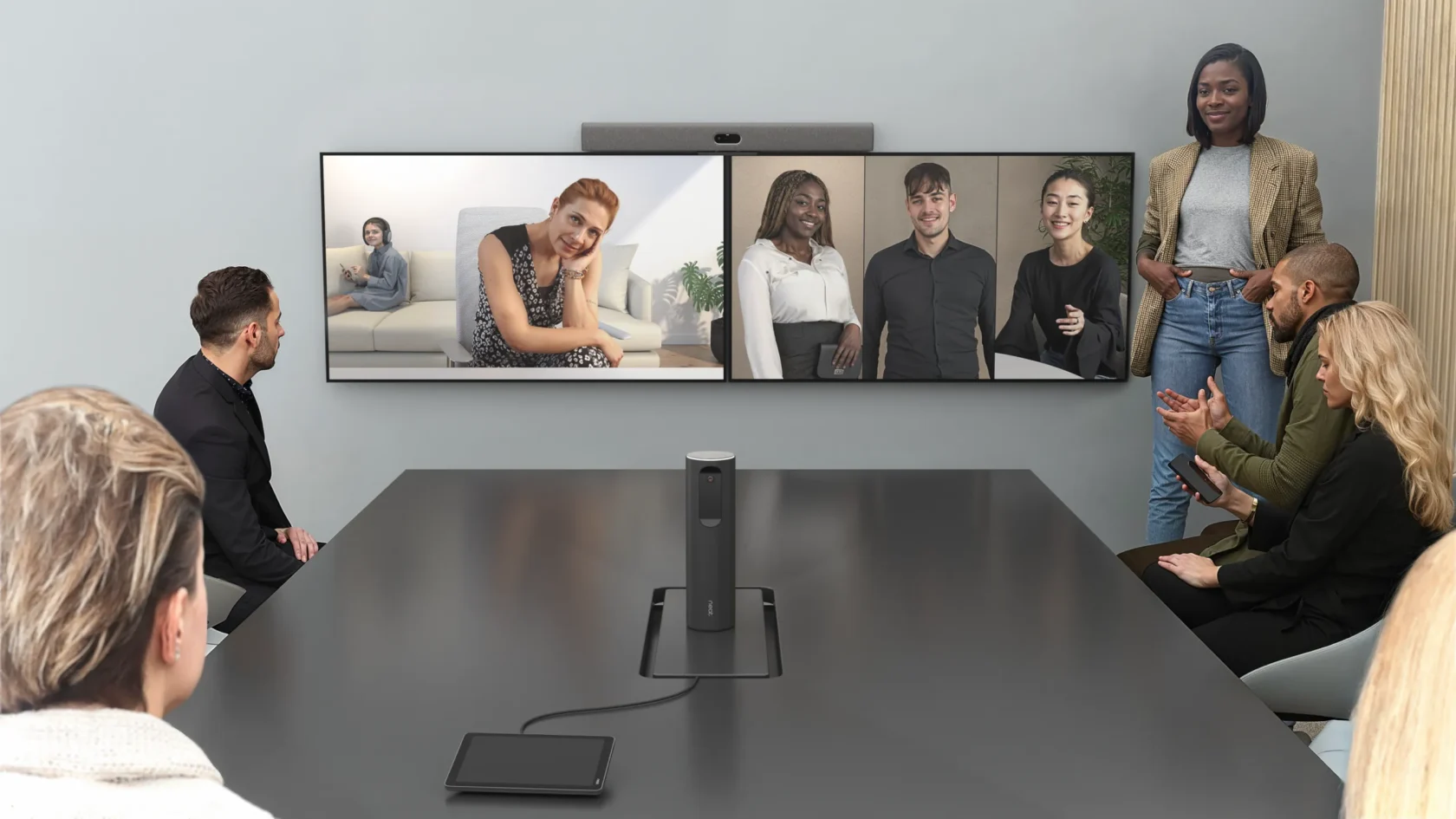
For collaborative onboarding activities, Neat Board 50 combines video conferencing, wireless content sharing, and interactive whiteboarding in a single device. Teams can use it to run training sessions, facilitate workshops, and encourage participation from both in-room and remote employees, helping new hires engage more actively with colleagues and onboarding materials.
Together, these solutions help reduce technology friction, improve meeting equity, and create onboarding experiences that feel more connected—regardless of where employees are working from. By making collaboration simpler and more engaging, organizations can help new hires build relationships, absorb information, and contribute more quickly from day one.
Book a demo or explore our range of devices today.
Frequently asked questions
What is remote onboarding?
Remote onboarding is the process of introducing and integrating new employees into an organization when they work remotely or in a hybrid environment. It includes training, communication, cultural integration, and technology setup.
Why is remote onboarding important?
A strong onboarding experience helps employees become productive faster, improves engagement, and increases retention. It also helps remote workers feel connected to their colleagues and company culture.
How long should remote onboarding last?
While orientation activities may take place during the first week, onboarding should continue for several months through regular check-ins, training, feedback, and development opportunities.
What tools are essential for remote onboarding?
Organizations typically need communication tools, video conferencing platforms, knowledge-sharing systems, identity and access management solutions, and collaboration tools such as shared documents and digital whiteboards.
How can companies improve engagement during remote onboarding?
Companies can improve engagement by providing clear expectations, assigning mentors or buddies, scheduling informal interactions, encouraging participation in meetings, and creating opportunities for relationship building.
What are the biggest challenges of remote onboarding?
Common challenges include communication gaps, technology issues, feelings of isolation, difficulty understanding company culture, and inconsistent onboarding experiences across teams. A structured onboarding program helps address these challenges.
Sources
- Gallup — Research on employee engagement, onboarding, workplace culture, and distributed teams.
- Society for Human Resource Management (SHRM) — Best practices for employee onboarding, retention, and workforce management.
- Harvard Business Review — Insights on remote work, employee experience, leadership, and hybrid collaboration.
- MIT Sloan Management Review — Research and analysis on digital workplaces, organizational culture, and workforce transformation.
- McKinsey & Company — Studies on hybrid work, employee productivity, and organizational effectiveness.
- OSHA — Ergonomics.