

Rethinking the Codec: Why Large Meeting Rooms Need a New Architecture
Javed Khan, May 5, 2026
Large meeting rooms aren’t falling short because of hardware. They’re limited by the model behind them.
For decades, the architecture of the large meeting room hasn’t changed—it has only grown more bloated. The model relies on a centralized codec—a “black box” hidden in a back office, tethered to a maze of complex cabling. This approach doesn’t get better over time—it just gets bigger, more expensive, and more difficult to manage. Most importantly, the experience for the person in the room doesn’t get better.
Neat Co-founder and CTO Ivar Johnsrud spent years pushing the boundaries of codec design in his earlier roles, building what many still consider the gold standard for the category. But he would also be the first to tell you that we reached the architectural limits of that model years ago.
The best version of a legacy model is still the old model. The world has changed, and the potential of AI has shifted the goalposts. The question for 2026 isn’t whether you still need that core functionality—it’s how experiences can be reimagined to be proactive, intelligent, and native to the modern workspace.
We’ve seen this shift before
At Cisco, I watched video collaboration go from a boardroom luxury to something the world depended on almost overnight. At Aptiv, I saw intelligent edge computing transform entire industries, from automotive to aerospace and robotics.
At its core, a self-driving car is a highly coordinated, distributed system—cameras, sensors, microphones, and edge compute working together in real time to understand context and take action. When I looked at the modern meeting rooms Neat is building, there are clear parallels.
The challenge with codecs
Most large meeting rooms are still built around a central brain. And when they don’t scale, the response is predictable: add more compute, larger systems, sensors, cameras, and microphones. But the underlying architecture never changes, so the outcome doesn’t either, even as needs have evolved. The result is that systems don’t scale cleanly, rooms behave differently from one deployment to the next, and experiences break down as complexity and cost increase.
Large rooms are inherently unpredictable. People move. Conversations progress. Attention shifts across the space. A centralized system can’t keep up—it wasn’t designed to.
What replaces the codec?
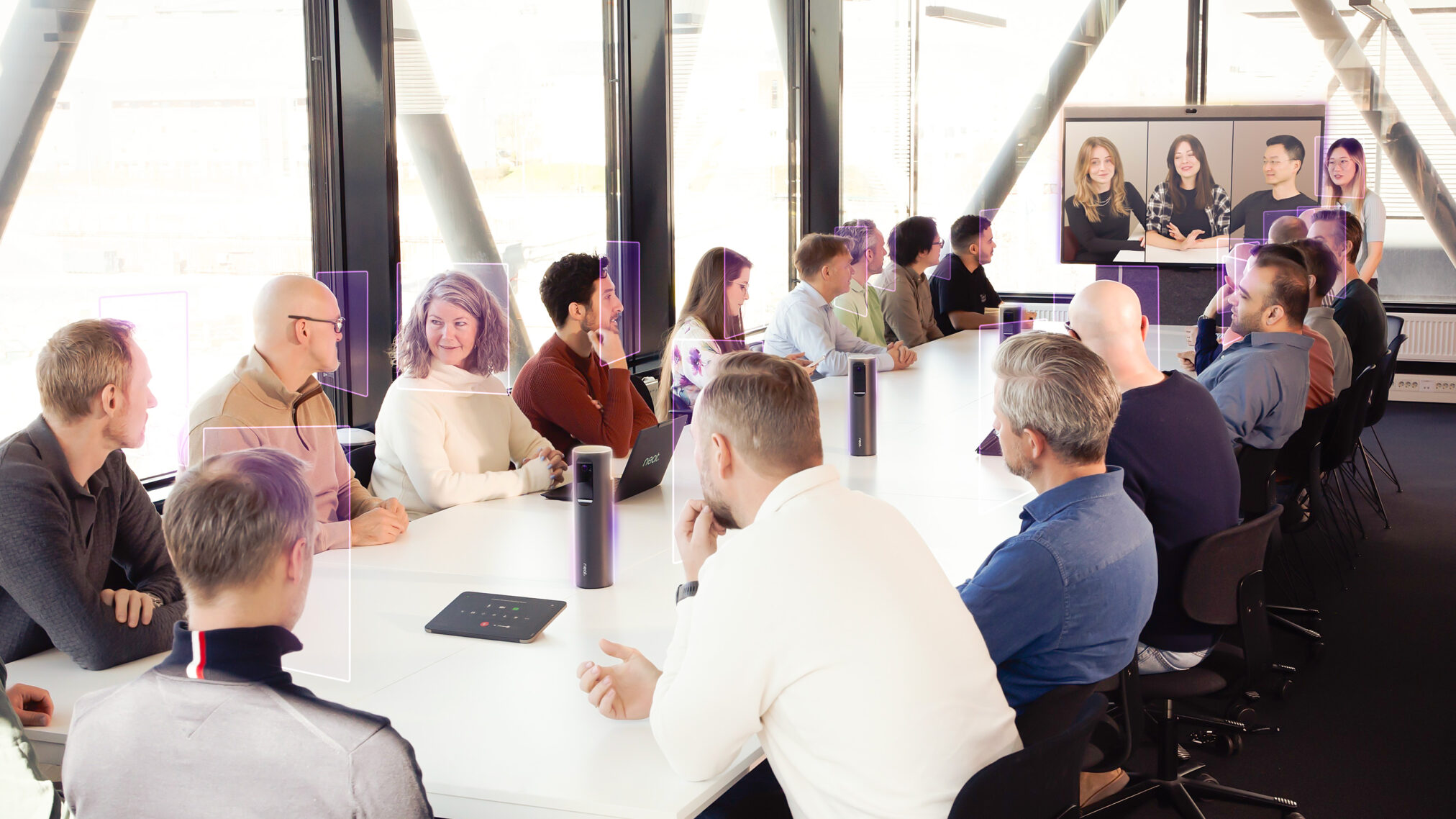
This isn’t about a bigger codec and more cables. It’s a different model entirely—one we’re already delivering today and continue to build on. Instead of a central brain, every device contributes compute, sensing, and context. Cameras, microphones, and devices are no longer passive. They’re intelligent, connected, and operating in sync. The room becomes a coordinated system, not a collection of peripherals. This isn’t abandoning the codec. It’s redefining what it becomes.
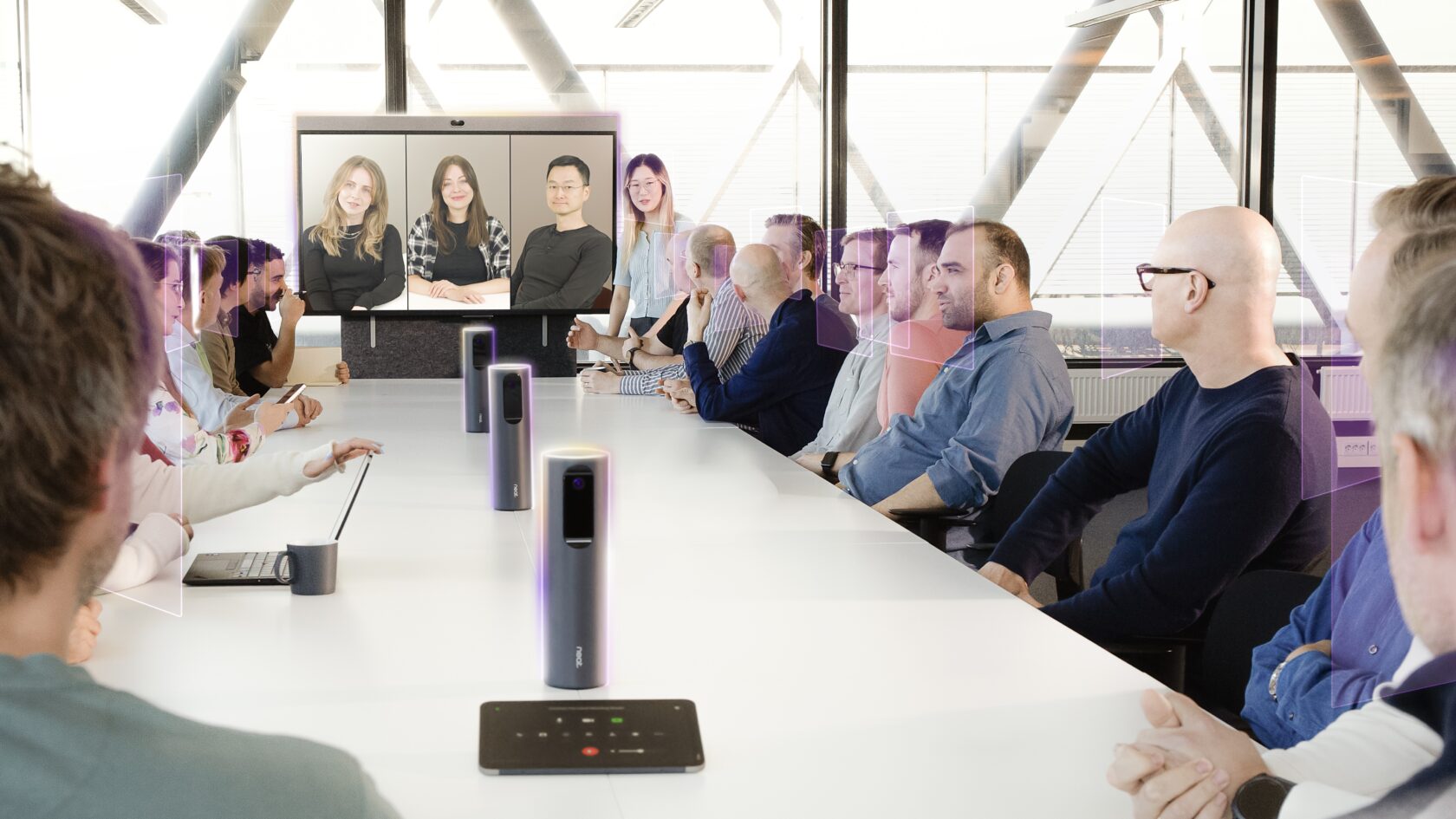
In the past, everything was routed back to the codec. Today, everything can connect over IP via the network. With a true distributed system, coverage extends across the room with no blind spots, devices coordinate in real time, compute scales as the space evolves, and the system adapts instead of being reconfigured. You’re no longer designing around limitations. You’re designing around how people actually behave.
Edge AI changes the experience
This is where AI becomes critical—not as a feature, but as part of the architecture. It goes beyond capturing a stream to interpreting what’s happening in the room. When intelligence lives at the edge, decisions happen in milliseconds, data stays local, and performance doesn’t depend on the cloud or degrade when the network does. The system doesn’t just capture meetings—it understands them as they unfold.
From passive rooms to thinking environments
Most systems still generate transcripts, action items, and summaries from the perspective of a central system, but that’s a limited view. A distributed, edge-powered system can understand who is speaking, where attention is shifting, and how interactions are evolving.
Over time, this will unlock something more powerful: environments that don’t just record meetings, but understand them in context and increasingly drive outcomes beyond them. And not just during meetings, but across everything that happens in the room.
Scaling this model
For enterprise IT, this is where the shift matters most. A distributed architecture enables modular systems to adapt across room types, infrastructure to align with enterprise standards, and centralized management to give you control from one intuitive UI. Deploy quickly, reconfigure without construction, and scale globally with consistency.
Everything connects over the network. Everything scales through it. But not all architectures are the same. Many legacy approaches still route everything back to a central codec, recreating the same limitations and bottlenecks in a different form.
A truly distributed system works differently. Intelligence and processing are spread across devices, not pulled back to a single point of control. That’s not just easier. It changes what’s possible at scale.
So what happens next?
How we collaborate in large rooms has evolved, and the technology driving it must do the same. Recent AI advancements across hardware and software are finally enabling Neat to eliminate legacy complexity rather than just replacing it with something bigger and more expensive.
At Neat, we are focused on an architecture that allows our connected, intelligent devices to redefine the experience for every participant. We aren’t just building better hardware—we’re building the connective intelligence for the modern workspace.
I can’t wait to share our roadmap for the rest of the year and some of the amazing new capabilities we have in the pipeline.
We are only getting started.
See what a meeting environment looks like when it actually understands what’s happening. Join a live demo or speak with a Neat specialist.