

Improving Collaboration in Large Meeting Rooms: Tips and Best Practices
Hayley Spooner, Jun 2, 2026
Key takeaways
- Large meeting rooms present unique collaboration challenges, particularly in hybrid work environments.
- Effective collaboration depends on room design, reliable technology, and inclusive meeting practices.
- High-quality audio and video are essential for ensuring all participants can contribute equally.
- Hybrid meetings require tools that create equitable experiences for both remote and in-room attendees.
- Clear processes, intuitive content sharing, and room management help reduce friction and improve productivity.
- Organizations can measure meeting room effectiveness through utilization, engagement, and technology performance metrics.
- Neat solutions help simplify collaboration, improve meeting experiences, and support scalable room deployments.
What is collaboration in a large meeting room?
A large meeting room is a collaboration space designed to support larger groups, executive meetings, training sessions, workshops, all-hands meetings, and hybrid gatherings that include both in-room and remote participants.
Effective collaboration in large meeting rooms means ensuring everyone can see, hear, participate, and contribute regardless of where they are located. This requires more than simply placing a camera and display in a room. Successful collaboration depends on room design, technology, meeting culture, and the ability to create a seamless experience for all attendees.
As hybrid work continues to evolve, large meeting rooms have become essential collaboration hubs that connect distributed teams, support decision-making, and facilitate communication across organizations.
Why large meeting rooms present unique challenges
While large meeting rooms offer flexibility and capacity, they can also create obstacles that smaller meeting spaces do not face.
Common collaboration challenges include:
- Remote participants struggling to see or hear everyone in the room
- Inconsistent audio coverage across larger spaces
- Limited engagement from participants seated further away from displays
- Difficulties sharing content between multiple presenters
- Technology complexity causing meeting delays
- Unequal experiences between in-person and remote attendees
- Reduced participation in hybrid discussions
Without the right technology and room design, these challenges can impact productivity, employee engagement, and meeting outcomes.
Design for inclusivity and engagement
The physical environment plays a significant role in meeting effectiveness.
Large meeting rooms should be designed to ensure all participants can comfortably engage with discussions, presentations, and collaborative activities. Room layouts should provide clear sightlines to displays, whiteboards, and presenters while avoiding seating arrangements that isolate participants.
Consider factors such as:
- Display placement and visibility
- Speaker positioning
- Lighting quality
- Acoustic performance
- Accessibility requirements
- Flexible furniture arrangements
Thoughtful room design helps create an environment where collaboration feels natural and inclusive.
Invest in scalable video conferencing technology
Video conferencing technology is the foundation of modern collaboration.
In large meeting rooms, standard consumer-grade equipment often struggles to deliver the audio and video quality needed for productive hybrid meetings. Larger spaces require technology capable of capturing conversations clearly while ensuring remote participants can follow discussions without difficulty.
Effective solutions should provide:
- High-resolution video
- Advanced microphone coverage
- Intelligent speaker tracking
- Noise suppression
- Reliable connectivity
- Platform flexibility
The goal is to create a meeting experience where technology fades into the background and collaboration remains the focus.
Prioritize high-quality audio
If participants cannot hear clearly, collaboration quickly breaks down.
Audio quality is often the most important factor in meeting effectiveness, particularly for remote attendees. Poor audio leads to repetition, misunderstandings, and disengagement.
To improve audio performance:
- Use professional-grade microphone systems
- Ensure consistent audio coverage throughout the room
- Minimize background noise
- Optimize room acoustics
- Conduct regular audio testing
Clear audio helps every participant contribute confidently and reduces meeting fatigue.
Facilitate hybrid collaboration
Hybrid work has transformed expectations around meeting participation.
Employees increasingly expect to collaborate effectively regardless of whether they are working remotely or from the office. As a result, organizations must ensure large meeting rooms support equitable participation for all attendees.
Best practices include:
- Ensuring remote participants can see all speakers
- Making content visible to everyone
- Encouraging equal participation
- Using collaboration tools that support shared contributions
- Designing meetings with remote attendees in mind
The most successful hybrid meetings make location irrelevant to participation.
Streamline content sharing and collaboration
Content sharing is central to modern meetings. Whether presenting reports, reviewing documents, brainstorming ideas, or conducting workshops, participants need simple and reliable ways to share information.
Large meeting rooms benefit from:
- Wireless content sharing
- Interactive whiteboarding
- Multi-presenter support
- Screen-sharing capabilities
- Easy switching between content sources
Removing barriers to collaboration helps meetings stay focused and productive.
Establish clear meeting room best practices
Technology alone cannot solve collaboration challenges. Organizations should establish meeting practices that encourage engagement, improve efficiency, and ensure meetings remain outcome-focused.
Effective meeting habits include:
- Defining clear objectives
- Sharing agendas in advance
- Starting and ending on time
- Encouraging participation from all attendees
- Assigning action items and responsibilities
- Summarizing decisions and next steps
Combining strong meeting culture with effective technology produces the best results.
Prioritize accessibility and inclusivity
Modern workplaces must support diverse employee needs. Meeting rooms should be accessible to all participants regardless of physical ability, location, or communication preferences.
Organizations should consider:
- Accessible room layouts
- Captioning capabilities
- Inclusive technology interfaces
- Appropriate display visibility
- Accommodation for assistive technologies
Creating inclusive meeting environments improves collaboration and supports broader workplace equity goals.
How to measure collaboration success in large meeting rooms
Improving collaboration requires understanding what success looks like. Organizations can evaluate meeting room performance using a variety of metrics.
| Metric | Why It Matters |
| Meeting start times | Indicates ease of use and technology reliability |
| Room utilization rates | Measures how effectively spaces are being used |
| Employee feedback | Reveals collaboration strengths and challenges |
| Remote participant engagement | Evaluates hybrid meeting effectiveness |
| Technology support requests | Identifies recurring issues |
| Meeting outcomes | Measures overall productivity and effectiveness |
Tracking these indicators helps organizations continuously improve collaboration experiences.
Bringing it all together
Large meeting rooms play an increasingly important role in today’s hybrid workplace. When designed thoughtfully and supported by reliable technology, they become powerful environments for communication, collaboration, and decision-making. Organizations that invest in high-quality audio and video experiences, inclusive meeting practices, scalable collaboration tools, and effective room management are better positioned to support employee engagement and business performance. By creating meeting spaces where everyone can contribute equally, businesses can unlock more productive and meaningful collaboration regardless of where participants are located.
Where Neat Fits In
Large meeting rooms require technology that scales without adding complexity. Neat’s portfolio is designed to help organizations create intuitive, inclusive, and reliable collaboration experiences across a wide range of room sizes.
For larger meeting spaces, Neat Bar Pro delivers powerful audio and video capabilities that help ensure everyone can be seen and heard clearly. Intelligent framing technology helps remote participants remain connected to the conversation while advanced audio processing enhances meeting clarity.
Organizations looking to create more equitable hybrid meetings can use Neat Center to provide additional room perspectives, helping remote participants better follow discussions and interactions occurring throughout the space.
For interactive collaboration, Neat Board 50 combines video conferencing, content sharing, digital whiteboarding, and touch-based collaboration into a single solution that supports workshops, brainstorming sessions, and team discussions.
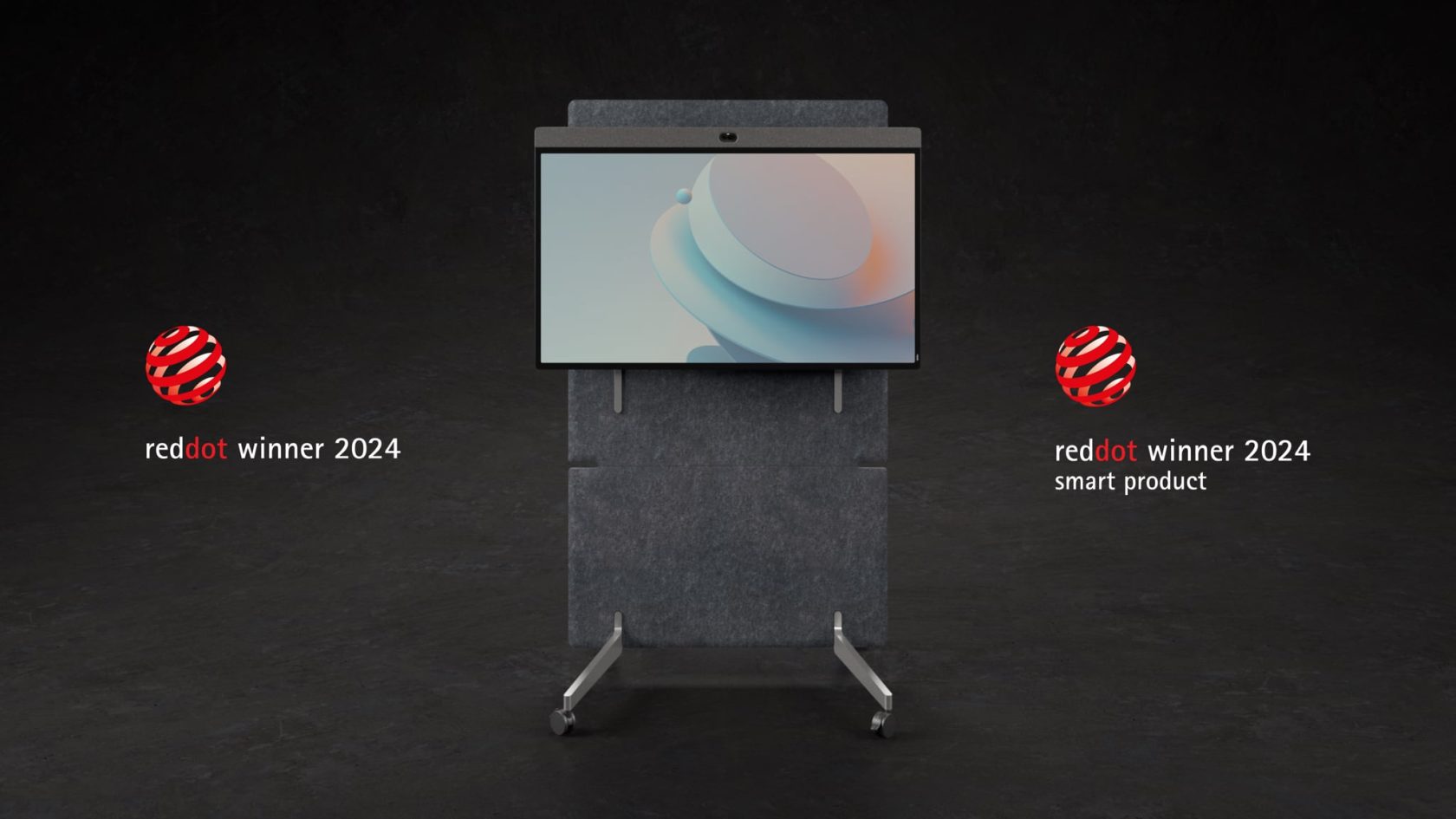
Meanwhile, Neat Pulse provides centralized management, monitoring, analytics, and software updates, helping IT teams maintain consistent meeting experiences across multiple locations.
Together, these solutions help reduce friction, simplify room management, and support effective collaboration in large meeting environments.
Book a demo or explore our range of devices today.
Frequently asked questions
What makes a large meeting room effective?
An effective large meeting room enables all participants to see, hear, and engage clearly. This typically requires high-quality audio and video technology, intuitive content sharing, thoughtful room design, and inclusive meeting practices.
How do you improve collaboration in a large meeting room?
Organizations can improve collaboration by optimizing room layouts, investing in reliable meeting technology, supporting hybrid participation, simplifying content sharing, and establishing clear meeting guidelines.
What technology is needed for a large conference room?
Large conference rooms typically require professional-grade cameras, microphones, speakers, displays, video conferencing systems, content sharing tools, and centralized management capabilities.
How can large meeting rooms support hybrid work?
Large meeting rooms support hybrid work by ensuring remote participants can see, hear, and participate as effectively as those in the room. High-quality audio, intelligent video technology, and collaborative meeting tools help create more equitable experiences.
Why is audio quality important in large meeting rooms?
Audio quality directly impacts communication. Poor audio can lead to misunderstandings, repetition, disengagement, and reduced meeting effectiveness, particularly for remote participants.
What are the biggest challenges in large meeting rooms?
Common challenges include poor audio coverage, limited participant visibility, low remote engagement, content sharing difficulties, and technology complexity.
Which Neat solutions are best for large meeting rooms?
Neat Bar Pro is designed for larger meeting spaces and provides advanced audio and video capabilities. Organizations can also use Neat Center to improve hybrid meeting visibility and Neat Pulse to simplify device management.
How can organizations measure meeting room effectiveness?
Organizations can measure effectiveness through room utilization rates, employee feedback, meeting start times, support requests, remote participant engagement, and meeting outcomes.