

How to Implement Remote Working: Tips for Success in 2026
Hayley Spooner, Jun 4, 2026

Key takeaways
- Successful remote work requires more than work-from-home policies—it depends on a connected system of technology, communication standards, management practices, and culture.
- Hybrid work has become the dominant operating model, making meeting equity and seamless collaboration critical business priorities.
- Organizations should establish clear remote work policies, communication frameworks, and outcome-based performance expectations before scaling remote work.
- Reliable collaboration technology helps reduce meeting friction, improve productivity, and create consistent experiences across distributed teams.
- Tools powered by artificial intelligence (AI) are increasingly being used to automate workflows, improve meeting experiences, and reduce administrative burden.
- Remote work initiatives perform best when organizations continuously measure collaboration quality, employee engagement, technology performance, and workplace efficiency.
- Companies that invest in integrated collaboration ecosystems are better positioned to attract talent, improve productivity, and support long-term workplace flexibility.
Remote work is no longer an experimental workplace policy or a temporary adjustment. In 2026, it has become a permanent part of how modern organizations operate. What has changed is not simply where employees work, but how companies think about collaboration, communication, productivity, and workplace culture.
For many organizations, the challenge is no longer whether remote work is possible. The challenge is how to implement it successfully at scale while maintaining engagement, alignment, and operational efficiency. Companies that succeed with remote and hybrid work are increasingly those that approach it as a complete organizational system rather than simply allowing employees to work from home.
Technology, workflows, management practices, and meeting experiences all play a critical role. Without the right infrastructure, remote work can create fragmentation and friction. With the right systems in place, however, organizations can improve flexibility, attract talent more effectively, and create more productive and resilient ways of working.
Quick answer: How to implement remote working successfully
To implement remote working successfully in 2026, organizations should:
- Create a clear remote work policy
- Invest in reliable collaboration technology
- Prioritize meeting quality and communication standards
- Support hybrid collaboration and meeting equity
- Train managers for distributed teams
- Use AI and automation to reduce workflow friction
- Build a culture focused on outcomes rather than physical presence
Companies that succeed with remote work treat collaboration technology and employee experience as strategic infrastructure rather than optional tools.
Remote work in 2026: What has changed?
Remote work has matured significantly over the last few years. Earlier remote work models often focused on flexibility alone, but organizations now understand that long-term success depends on creating structured systems that support communication, collaboration, and employee wellbeing.
Hybrid work has become the dominant operating model for many businesses. According to Zoom’s 2026 workplace research, more than 64% of organizations now operate hybrid work schedules, significantly outpacing fully in-office and fully remote models.
At the same time, expectations around workplace technology have changed dramatically. Employees now expect meetings to work seamlessly, workflows to remain connected across locations, and communication tools to feel intuitive rather than disruptive.
This shift means remote work implementation is increasingly tied to workplace infrastructure, collaboration systems, and organizational culture.
The evolution of remote work
| Then | Now in 2026 |
| Temporary flexibility | Permanent operating model |
| Basic video calls | Intelligent collaboration systems |
| Remote as exception | Hybrid as default |
| Manual workflows | AI-assisted workflows |
| Separate tools | Integrated ecosystems |
Start with a clear remote work strategy
The first step in implementing remote working is defining what the company is actually trying to achieve.
Some organizations implement remote work primarily to improve flexibility and employee satisfaction. Others focus on reducing real estate costs, expanding hiring access, or supporting global collaboration. The strategy influences every other decision, from technology investments to workplace policies.
Organizations that succeed with remote work tend to define clear expectations around communication, collaboration, scheduling, and performance early in the process. This creates consistency and reduces uncertainty for employees and managers alike.
Importantly, successful remote work strategies are increasingly designed around outcomes rather than visibility. Companies are focusing less on where employees work and more on whether teams can collaborate effectively and achieve results.
Questions to define your remote work strategy
| Question | Why it matters |
| Is the company fully remote or hybrid? | Shapes collaboration requirements |
| Which teams require synchronous collaboration? | Impacts meeting frequency |
| Which workflows can be asynchronous? | Reduces meeting overload |
| How will productivity be measured? | Creates alignment |
| What employee experience should remote work support? | Influences culture and retention |
Invest in collaboration technology before scaling remote work
One of the biggest lessons organizations have learned is that remote work depends heavily on the quality of collaboration technology.
Employees can tolerate imperfect systems temporarily, but long-term remote work requires meeting experiences that are reliable, intuitive, and consistent.
This is why organizations are increasingly investing in integrated video collaboration systems rather than relying on fragmented setups or inconsistent room technology.
Neat’s approach reflects this broader industry movement. Devices are designed to simplify hybrid collaboration by combining hardware, software, AI-powered framing, adaptive audio, and native platform integrations into unified systems. Instead of requiring employees to manage technology, the technology adapts automatically to the meeting environment.
This reduction in “meeting friction” has become increasingly important because organizations now recognize that small disruptions repeated across thousands of meetings significantly reduce productivity. Zoom’s 2026 workplace study found employees lose an average of 1.6 hours of productivity every week due to meeting friction alone.
Collaboration technology priorities in 2026
| Capability | Why it matters |
| High-quality audio | Clear communication |
| AI-powered video | Better engagement |
| One-touch meeting join | Reduced friction |
| Cloud management | Easier scalability |
| Multi-platform support | Flexible collaboration |
Build communication standards for distributed teams
One of the biggest challenges in remote work is communication inconsistency. Without clear standards, teams often experience meeting overload, fragmented conversations, and confusion around expectations.
Organizations that implement remote work successfully typically establish communication frameworks early. This includes defining:
- When meetings are necessary
- Which channels should be used for different types of communication
- Response expectations across time zones
- Documentation standards for decisions and projects
Modern remote work environments increasingly rely on a combination of synchronous and asynchronous communication. Video conferencing remains essential for collaboration and decision-making, while asynchronous updates reduce unnecessary meetings and support flexibility.
The most effective remote organizations intentionally design communication systems rather than allowing them to evolve randomly.
Synchronous vs asynchronous communication
| Communication type | Best use case |
| Video meetings | Collaboration and decisions |
| Chat | Quick coordination |
| Recorded updates | Status sharing |
| Shared documents | Documentation and alignment |
Prioritize meeting equity in hybrid work
As hybrid work has become the dominant workplace model, meeting equity has emerged as one of the most important concepts in remote collaboration.
Meeting equity refers to creating environments where remote participants can contribute as naturally and effectively as those physically present in the room. Without it, remote employees often become passive observers rather than active contributors.
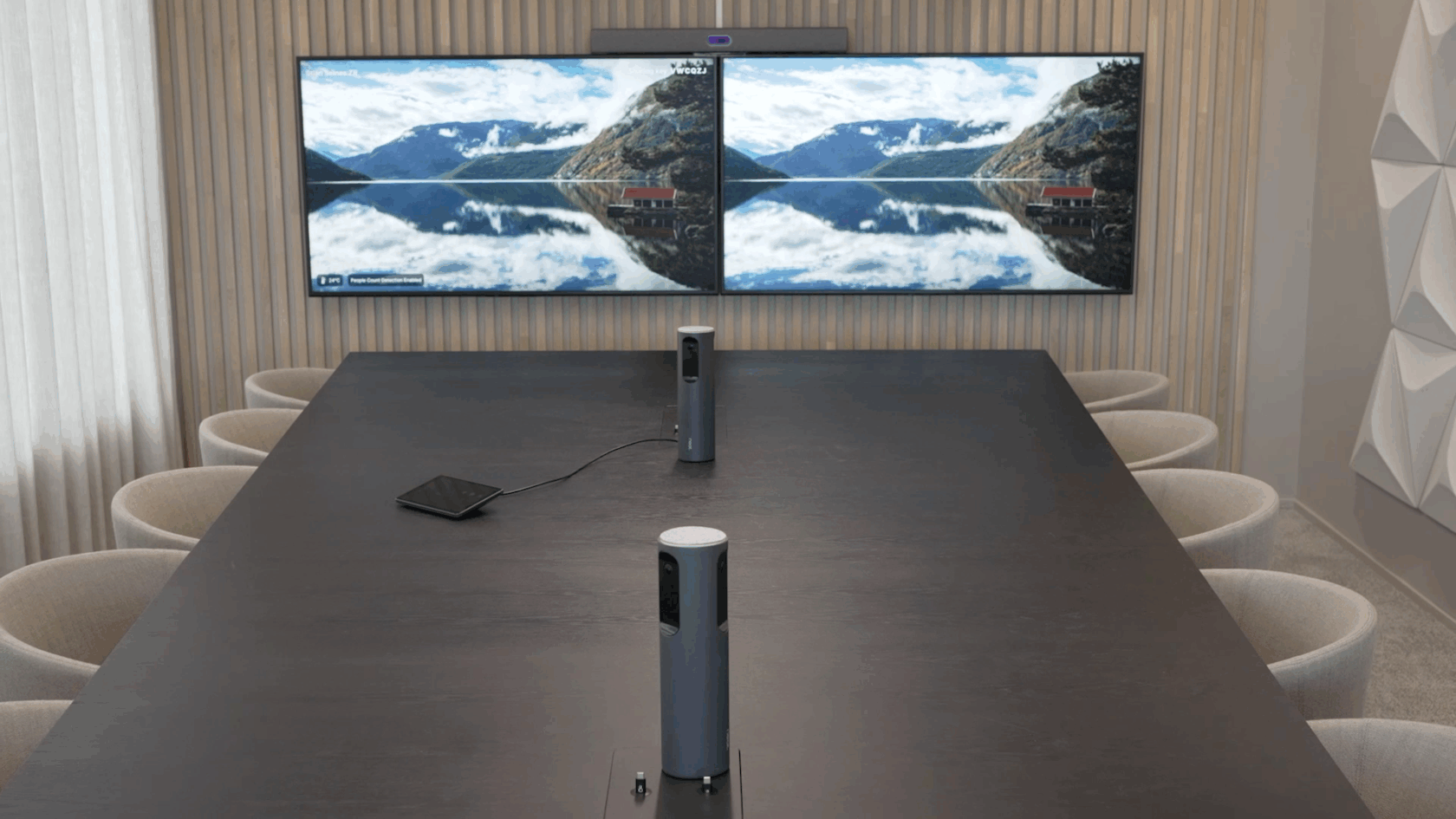
Modern conferencing systems increasingly use AI-powered framing, intelligent audio, and multi-camera coordination to improve meeting equity. Neat technologies such as Neat Symmetry and Neat Center are specifically designed to ensure remote participants can clearly see and hear everyone in the room.
This is becoming essential because organizations increasingly recognize that poor meeting experiences directly affect engagement, wellbeing, and collaboration quality.
Traditional vs equitable hybrid meetings
| Element | Traditional setup | Meeting-equity-focused setup |
| Remote participant visibility | Limited | Balanced |
| Audio quality | Uneven | Adaptive |
| Engagement | Lower | Higher |
| Collaboration quality | Inconsistent | Improved |
Train managers for remote leadership
Remote work changes management significantly. Leaders can no longer rely on physical visibility or informal office interactions to understand team dynamics.
Successful remote organizations increasingly train managers in distributed leadership skills, including:
- Running effective hybrid meetings
- Managing asynchronous workflows
- Supporting employee wellbeing remotely
- Creating clarity and accountability
- Building trust across distributed teams
Research consistently shows that remote work succeeds when managers focus on outcomes, communication quality, and employee support rather than monitoring activity.
This shift toward outcome-based leadership is one of the most important cultural changes associated with successful remote work implementation.
Use AI and automation to reduce workflow friction
Artificial intelligence is becoming deeply integrated into remote work environments in 2026. AI is increasingly used to automate meeting summaries, generate action items, improve transcription accuracy, optimize scheduling, and reduce repetitive administrative tasks.
Organizations are also increasingly using AI-powered collaboration systems to improve meeting quality and reduce operational complexity.
Neat’s AI-powered collaboration systems reflect this broader shift toward intelligent workplace infrastructure, where technology actively supports collaboration instead of simply enabling it.
The broader industry direction is clear: AI is becoming foundational infrastructure for remote work rather than an optional enhancement.
AI capabilities improving remote work
| AI capability | Impact |
| Automated summaries | Saves time |
| Real-time transcription | Better accessibility |
| Intelligent framing | Improved engagement |
| Noise suppression | Clearer communication |
| Workflow automation | Reduced administrative work |
Create a culture designed for remote work
One of the most common reasons remote work initiatives fail is that companies attempt to replicate office culture digitally instead of creating systems designed specifically for distributed work.
Successful remote organizations intentionally design culture around:
- Transparency
- Documentation
- Flexibility
- Trust
- Clear communication
- Inclusive collaboration
This often requires rethinking traditional assumptions about work itself. Employees increasingly expect autonomy, flexibility, and workplace experiences that support wellbeing rather than simply maximizing office attendance.
At the same time, companies still need moments of intentional in-person collaboration. This is why many organizations are redesigning offices as collaboration hubs rather than spaces for individual desk work.
Measure and optimize continuously
Remote work implementation is not a one-time project. The most successful organizations continuously evaluate how employees collaborate and where friction exists.
Modern workplace systems increasingly provide analytics around:
- Meeting room usage
- Collaboration quality
- Device performance
- Employee engagement
- Workflow efficiency
Neat Pulse reflects this broader industry trend toward centralized management and analytics, helping organizations monitor device health, optimize meeting environments, and maintain consistency across spaces.
Continuous optimization has become increasingly important because hybrid work environments evolve rapidly as employee expectations, technology, and workflows change.
Remote work optimization metrics
| Metric | What it shows |
| Meeting quality | Collaboration effectiveness |
| Room utilization | Workplace efficiency |
| Employee engagement | Cultural health |
| Technology downtime | Operational reliability |
| Workflow delays | Process friction |
How remote work systems work together
The most successful remote work environments combine technology, workflows, culture, and management into a unified collaboration system.
Remote work ecosystem model
| Layer | Role | Outcome |
| Collaboration technology | Enables communication | Connected teams |
| AI and automation | Reduces friction | Higher productivity |
| Communication standards | Creates alignment | Better coordination |
| Management practices | Supports distributed teams | Stronger culture |
| Meeting equity | Improves inclusion | Better collaboration |
Organizations that approach remote work as a connected ecosystem rather than a collection of tools tend to achieve significantly better long-term outcomes.
Where Neat fits in
Remote work success depends on more than policies and processes. It also requires workplace technology that removes friction and enables people to collaborate naturally regardless of where they are working.
As organizations implement remote and hybrid work strategies, several themes consistently emerge: the need for high-quality meeting experiences, greater meeting equity, simpler technology management, and more intelligent workplace systems. These are the same areas where collaboration infrastructure has become a strategic differentiator.
Neat’s portfolio is designed around these challenges. Solutions such as Neat Bar Generation 2 and Neat Board 50 help create consistent video collaboration experiences across meeting spaces, while Neat Center and Neat Symmetry support meeting equity by helping remote participants see, hear, and engage with everyone in the room more naturally. At the operational level, Neat Pulse gives IT teams centralized visibility and management capabilities to help maintain performance across distributed workplace environments.
AI also plays an increasingly important role in remote work. From intelligent framing and adaptive audio to automated device management and workplace analytics, organizations are looking for technology that actively improves collaboration rather than simply enabling it. Neat’s AI-powered approach aligns with this broader shift toward intelligent workplace infrastructure that reduces friction and supports more productive hybrid work experiences.
Ultimately, the organizations achieving the strongest remote work outcomes are building connected collaboration ecosystems where technology, workflows, leadership practices, and employee experience work together seamlessly. By helping simplify meeting experiences, improve meeting equity, and streamline workplace management, Neat supports the foundations that modern remote and hybrid work strategies depend on.
As remote work continues to evolve, businesses that invest in integrated collaboration platforms and thoughtfully designed workplace experiences will be better positioned to improve productivity, support flexibility, and create resilient workplaces for the future.
Discover Neat’s pioneering devices or book a demo and experience them for yourself.
Frequently asked questions
What is the biggest challenge in implementing remote work?
Maintaining clear communication and effective collaboration across distributed teams.
Is hybrid work still growing in 2026?
Hybrid work has stabilized as the dominant operating model for many knowledge-based organizations.
Why is meeting quality so important?
Poor meeting experiences create friction, reduce productivity, and negatively affect collaboration and wellbeing.
How does Neat support remote work?
Neat provides integrated, AI-powered collaboration systems designed to simplify hybrid meetings and improve meeting equity across spaces.
Sources
Hybrid Work Trends 2026, Zoom
https://www.zoom.com/en/blog/hybrid-work-trends/
Successful Hybrid Work Examples, Borderless AI
https://www.hireborderless.com/post/successful-hybrid-work-examples-borderless
Remote Work Trends 2026, We360.ai
https://we360.ai/blog/remote-work-trends-2026
Hybrid Work Schedule: A Guide for HR Leaders, AIHR
https://www.aihr.com/blog/hybrid-work-schedule/
AV and IT Technologies Supporting a Culture of Collaboration, AVNetwork
https://www.avnetwork.com/news/av-it-technologies-supporting-a-culture-of-collaboration
Employees Are Still Keen on Hybrid Working, but Clunky Tools Are Causing Frustration and Harming Productivity, ITPro
https://www.itpro.com/business/business-strategy/it-undermines-wellbeing-and-derails-collaboration-employees-are-still-keen-on-hybrid-working-but-clunky-tools-are-causing-frustration-and-harming-productivity
How AI Devices Can Drive Excellence for Hybrid Teams, Microsoft
https://www.microsoft.com/en-us/windows/business/knowledge-center/how-ai-devices-can-drive-excellence-for-hybrid-teams
Remote Collaboration: Best Practices for Distributed Teams, Monday.com
https://monday.com/blog/project-management/remote-collaboration/