

From Smart Meeting Rooms to Thinking Environments: How Intelligent Collaboration Is Changing the Workplace
Hayley Spooner, May 27, 2026
Quick answer: What is intelligent meeting room technology?
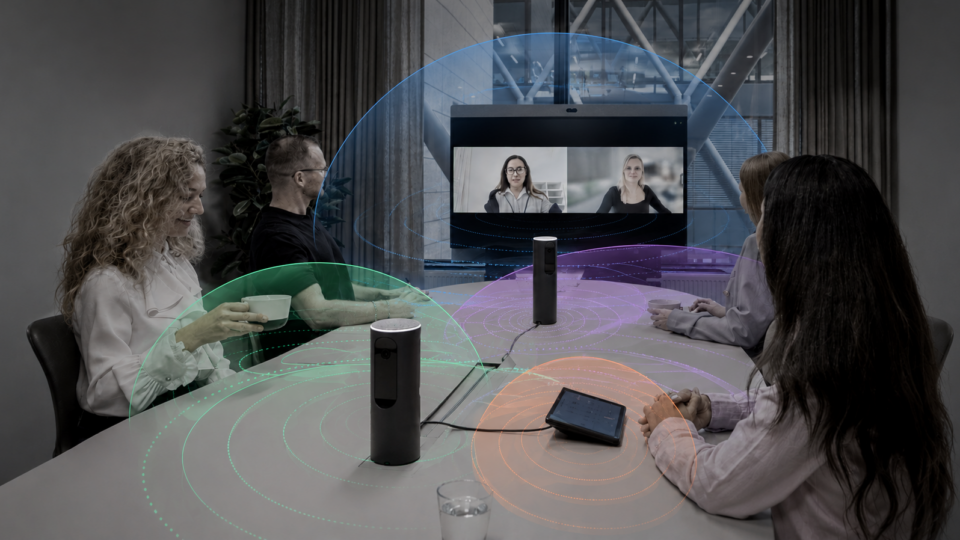
Intelligent meeting room technology uses distributed sensing, audio, video, and real-time coordination to create collaboration experiences that adapt naturally to people, spaces, and meeting dynamics.
Unlike traditional conference room systems built around centralized hardware, intelligent meeting environments distribute intelligence throughout the room. This enables devices to work together seamlessly to improve hybrid collaboration, simplify deployment, and reduce meeting friction.
Neat calls this approach a thinking environment.
Why organizations are rethinking meeting room technology
Hybrid work permanently changed how people collaborate.
Meetings are no longer static events where everyone sits around a table in a single office. Teams now collaborate across locations, move fluidly through discussions, brainstorm more dynamically, and rely on meeting spaces that support both in-room and remote participants equally.
But many traditional meeting rooms were not designed for this reality. Legacy AV systems often struggle with:
- Fixed camera views
- Uneven audio experiences
- Complex infrastructure
- Difficult scalability
- High management overhead
- Inconsistent user experiences
As organizations modernize collaboration spaces, many are moving away from passive conference rooms toward intelligent, adaptive environments designed around human interaction.
This is where thinking environments emerge.
What is a thinking environment?
A thinking environment is a meeting space designed to sense, understand, and respond to collaboration in real time.
Rather than functioning as isolated hardware components, devices work together through distributed intelligence to create seamless and intuitive collaboration experiences.
The goal is simple. Technology should fade into the background so people can focus on the meeting itself.
Key characteristics of thinking environments
| Capability | Traditional Meeting Rooms | Thinking Environments |
| Room awareness | Limited | Real-time sensing and adaptation |
| Infrastructure | Centralized hardware | Distributed intelligence |
| User interaction | Manual controls | Natural and responsive experiences |
| Scalability | Complex upgrades | Flexible and scalable deployment |
| Hybrid collaboration | Often uneven | More immersive and inclusive |
| Device coordination | Separate peripherals | Unified intelligent system |
| Room flexibility | Fixed layouts | Adaptive collaboration spaces |
This transition reflects a broader workplace technology shift: from managing devices to enabling experiences.
The biggest benefits of intelligent meeting room technology
1. More natural hybrid collaboration
The best collaboration technology should feel invisible. Intelligent meeting environments continuously adapt framing, audio, and room awareness dynamically as conversations evolve.
With distributed intelligence embedded throughout the room, meetings become more fluid for both remote and in-room participants. This helps:
- Maintain engagement naturally
- Reduce interruptions
- Improve visibility during discussions
- Create more immersive collaboration experiences
Neat’s approach prioritizes natural collaboration experiences where technology adapts so people do not have to.
2. Better meeting equity for remote participants
One of the biggest hybrid work challenges is ensuring remote participants feel equally included. Traditional room systems often prioritize the physical room experience while remote attendees struggle with poor framing, inconsistent audio, or limited visibility into side conversations.
Intelligent meeting environments improve meeting equity by:
- Dynamically adjusting framing
- Improving voice pickup throughout the room
- Coordinating audio intelligently
- Adapting to movement and discussion flow
This creates a more balanced experience regardless of participant location.
Quick comparison: Traditional vs intelligent hybrid meetings
| Experience Area | Traditional Rooms | Intelligent Rooms |
| Camera framing | Static | Dynamic and adaptive |
| Audio pickup | Fixed zones | Real-time coordination |
| Remote visibility | Often limited | More inclusive participation |
| User controls | Manual adjustments | Automated adaptation |
| Collaboration flow | Interrupted by technology | Seamless and intuitive |
3. Simpler deployment and room scalability
Legacy meeting rooms often become harder to manage as organizations scale. Traditional AV systems typically rely on centralized codecs, extensive wiring, and specialized installation requirements.
Intelligent distributed architecture simplifies this model. Neat distributes intelligence across devices connected over IP, reducing infrastructure complexity while enabling greater flexibility. This allows organizations to:
- Scale meeting spaces more efficiently
- Reconfigure rooms more easily
- Simplify upgrades
- Reduce deployment overhead
- Standardize experiences across locations
For IT teams managing global collaboration environments, this can significantly reduce operational complexity.
4. More adaptable workplace design
Workplaces continue to evolve rapidly. Organizations need meeting spaces that can support:
- Flexible room configurations
- Changing collaboration styles
- Platform interoperability
- Future workplace technology needs
- Evolving employee expectations
Thinking environments are designed for adaptability. Instead of building rigid room systems around fixed infrastructure, intelligent meeting technology enables more responsive collaboration spaces that evolve over time.
This future-ready approach helps organizations modernize without rebuilding rooms from scratch every few years.
5. Reduced technology friction
Every interruption during a meeting affects collaboration quality. When users need to troubleshoot devices, switch inputs manually, or adjust room systems constantly, meetings lose momentum.
Intelligent collaboration systems reduce friction by automating room experiences wherever possible. This includes:
- Automatic framing
- Intelligent audio coordination
- Simplified room startup
- Consistent user experiences
- Native platform integrations
The result is a collaboration environment that feels seamless and intuitive rather than technical and disruptive.
How Neat is leading the shift toward thinking environments
Neat’s vision extends beyond traditional conferencing hardware. Its platform is designed around distributed intelligence embedded throughout the meeting environment.
Instead of treating cameras, microphones, displays, and room devices as separate components, Neat enables them to coordinate together as one intelligent collaboration system.
What makes Neat different?
Distributed intelligence throughout the room
Every device contributes sensing, compute, audio, and video intelligence to the collaboration experience. This creates more adaptive and context-aware meetings.
Real-time room responsiveness
Meetings change continuously. Neat devices dynamically adjust to movement, participant behavior, and conversation flow in real time.
Technology designed around people
Neat prioritizes collaboration experiences that feel natural rather than overly technical. The focus is not on adding visible technology into the room. The focus is on creating environments where technology fades into the background.
Simplicity for IT and workplace teams
Neat helps organizations modernize collaboration spaces while reducing deployment complexity and ongoing management overhead.
This balance between simplicity and intelligence is becoming increasingly important as organizations scale hybrid collaboration globally.
Why distributed intelligence matters in modern meeting spaces
Distributed intelligence is one of the most important emerging concepts in workplace collaboration technology.
Instead of relying on a single centralized processing unit, intelligence is embedded across multiple coordinated devices throughout the room.
Benefits of distributed architecture
| Benefit | Impact on Collaboration |
| Real-time responsiveness | Faster adaptation to meeting dynamics |
| Improved resilience | Reduced dependency on centralized hardware |
| Greater room flexibility | Easier reconfiguration and expansion |
| Simplified scalability | Faster deployment across locations |
| Better user experiences | More seamless and natural collaboration |
| Future readiness | Easier support for evolving workplace needs |
This architectural approach supports the transition from static meeting rooms to adaptive collaboration environments.
The future of meeting rooms: From passive spaces to intelligent environments
Meeting spaces are evolving from tools people operate into environments that actively support collaboration.
This transformation is not about adding isolated AI features into conference rooms. It is about creating intelligent environments that:
- Understand how people collaborate
- Adapt in real time
- Support more human interaction
- Simplify workplace technology
- Improve collaboration equity
- Scale naturally across organizations
The future workplace will increasingly rely on environments that can coordinate audio, video, sensing, and interaction seamlessly without creating complexity for users.
That is the foundation of thinking environments. As organizations continue investing in hybrid work strategies, intelligent collaboration spaces will become a core part of workplace experience design.
Frequently asked questions
What is intelligent meeting room technology?
Intelligent meeting room technology uses distributed sensing, audio, video, and device coordination to create adaptive collaboration experiences that respond dynamically to people and meeting activity.
What is a thinking environment?
A thinking environment is a meeting space that senses, understands, and adapts in real time to support seamless and natural collaboration experiences.
How are thinking environments different from smart meeting rooms?
Smart meeting rooms often focus on isolated automation features. Thinking environments use distributed intelligence throughout the room to create coordinated, adaptive collaboration experiences centered around human interaction.
Why is distributed intelligence important in meeting rooms?
Distributed intelligence improves flexibility, scalability, responsiveness, and collaboration quality by allowing devices throughout the room to coordinate dynamically rather than relying on centralized infrastructure.
What are the benefits of intelligent meeting rooms for hybrid work?
Benefits include:
- Better remote meeting equity
- Improved audio and video experiences
- Reduced technology friction
- Easier room scalability
- More adaptable workplace design
- Simplified IT management
How does Neat support intelligent collaboration?
Neat combines distributed intelligence, adaptive collaboration experiences, real-time room responsiveness, and simplified deployment to transform passive rooms into thinking environments.
Key takeaways
- Traditional meeting rooms struggle to support modern hybrid collaboration
- Intelligent meeting room technology creates adaptive, real-time collaboration experiences
- Thinking environments use distributed intelligence throughout the room
- Hybrid work requires more immersive and equitable collaboration spaces
- Neat is helping organizations transform passive rooms into future-ready thinking environments
- Simplicity, flexibility, and human-centered design are becoming critical workplace technology priorities
Neat is helping drive the transition from traditional meeting rooms to intelligent “thinking environments” by embedding distributed intelligence throughout the collaboration space. Across devices like Neat Bar, Neat Board, and Neat Center, Neat combines sensing, compute, audio, and video intelligence so devices can coordinate together as one adaptive system. This enables real-time room responsiveness, dynamic framing, intelligent audio coordination, and more natural hybrid collaboration experiences where technology fades into the background. Built around simplicity, scalability, and human-centered design, Neat’s platform reflects the broader workplace shift explored in this article: from static, hardware-centric conference rooms toward flexible, responsive collaboration environments designed around how people actually work together.
Why not book a demo and experience Neat devices for yourself? Or read more about Neat AV-over-IP and why we’re different.