

Conference Room Analytics: How to Use Workplace Data to Improve Meetings in 2026
Hayley Spooner, Jun 24, 2026
Key takeaways
- Conference room analytics provide visibility into how meeting spaces are actually being used.
- Workplace data can help organizations improve meeting experiences, optimize space utilization, and support hybrid work strategies.
- Occupancy, utilization, scheduling, and environmental metrics reveal valuable insights about workplace performance.
- Analytics can help reduce meeting friction and improve employee experience.
- AI-powered workplace intelligence is making conference room data more actionable than ever before.
- Organizations that use workplace data effectively can make better decisions about office investments and space planning.
- The most successful analytics programs focus on outcomes rather than simply collecting more data.
The workplace has become increasingly data-driven. Organizations track everything from employee engagement and customer interactions to operational performance and business outcomes. Yet many companies still lack visibility into one of their most valuable resources: their meeting spaces.
As hybrid work continues to reshape how organizations use offices, understanding how conference rooms are utilized has become a strategic priority. Many businesses are investing heavily in collaboration technology, workplace design, and real estate, but without data, it can be difficult to determine whether those investments are delivering value.
Conference room analytics help bridge this gap. By providing insights into room utilization, meeting behaviors, occupancy patterns, and workspace performance, analytics enable organizations to make smarter decisions about how they design, manage, and optimize their workplaces.
This guide explores how conference room analytics work, which metrics matter most, and how organizations can use workplace data to improve meetings in 2026 and beyond.
What are conference room analytics?
Conference room analytics refer to the collection and analysis of data related to meeting room usage, occupancy, scheduling, and workplace performance.
Rather than relying on assumptions about how meeting spaces are used, organizations can use analytics to gain a clearer understanding of actual behavior.
Conference room analytics often include data such as:
- Room occupancy
- Utilization rates
- Meeting frequency
- Meeting duration
- Scheduling patterns
- Room availability
- Environmental conditions
- Collaboration technology usage
These insights help organizations understand how employees interact with meeting spaces and identify opportunities for improvement.
Modern analytics platforms increasingly combine data from room scheduling systems, workplace sensors, collaboration technologies, and management platforms to create a more complete picture of workplace activity.
Why conference room analytics matter more than ever
Hybrid work has changed how offices are used.
Many organizations have discovered that traditional assumptions about workspace demand no longer apply. Some meeting rooms are constantly booked while others remain underutilized. Teams may gather in person on certain days and work remotely on others. Meanwhile, workplace costs continue to rise, increasing pressure to maximize the value of every square foot.
Research from JLL’s Future of Work research highlights how organizations are increasingly using workplace data to guide decisions about office design, occupancy, and employee experience.
Without accurate data, organizations often struggle to understand whether their meeting spaces align with how employees actually work.
Conference room analytics help answer important questions:
- Are rooms being used as intended?
- Are employees able to find available meeting space?
- Which room types are in highest demand?
- Are technology investments improving collaboration?
- Is office space being utilized effectively?
These insights allow organizations to move beyond guesswork and make more informed workplace decisions.
Reducing meeting friction through data
Meeting friction has become a growing concern for many organizations.
Delays caused by unavailable rooms, scheduling conflicts, underutilized spaces, technology issues, or overcrowded meeting rooms can disrupt collaboration and reduce productivity.
Conference room analytics can help identify these problems before they become widespread.
For example, occupancy data may reveal that certain rooms are consistently overbooked while others remain largely unused. Scheduling analytics can uncover recurring no-show meetings that block room availability. Utilization data may show that employees are reserving large rooms for small meetings, creating unnecessary bottlenecks.
By identifying and addressing these issues, organizations can create more efficient meeting experiences while improving employee satisfaction.
The most valuable conference room metrics to track
Not all workplace data provides equal value.
Organizations should focus on metrics that support decision-making rather than collecting information simply because it is available.
The following metrics often provide the greatest insight into conference room performance.
| Metric | What it reveals |
| Occupancy rate | How many people use a room during meetings |
| Utilization rate | How frequently a room is used |
| Meeting duration | Collaboration patterns and room demand |
| No-show meetings | Scheduling inefficiencies |
| Peak usage times | Demand throughout the workweek |
| Room availability | Capacity planning opportunities |
| Environmental conditions | Comfort and workplace experience |
| Technology usage | Adoption of collaboration tools |
When viewed together, these metrics can help organizations build a more complete understanding of workplace behavior.
How conference room analytics improve workplace performance
Analytics are most valuable when they lead to action.
Organizations that effectively use workplace data can improve both operational efficiency and employee experience.
Better meeting experiences
Analytics can reveal whether meeting spaces are supporting productive collaboration.
For example, room utilization patterns may indicate a need for more small meeting spaces, while technology usage data may reveal opportunities to improve hybrid meeting experiences.
These insights help organizations create environments that better support how employees actually work.
Improved space utilization
Many organizations discover that some meeting spaces are overused while others are rarely occupied.
Analytics help workplace teams understand where demand exists and make informed decisions about room allocation, layout changes, and future investments.
Smarter workplace investments
Conference room technology, office renovations, and workplace redesigns represent significant investments.
Analytics provide objective data that can help organizations prioritize spending and evaluate the effectiveness of workplace initiatives.
Stronger hybrid work strategies
Hybrid work environments require greater flexibility than traditional office models.
Analytics help organizations understand how employees use office space, which meeting formats are most common, and where improvements can support more effective collaboration.
Research from CBRE’s workplace insights research continues to highlight the growing role of workplace data in helping organizations optimize office portfolios and improve employee experiences.
AI and the future of workplace analytics
Artificial Intelligence (AI) is transforming how organizations interpret workplace data.
Traditional analytics platforms often require workplace teams to manually identify trends and generate insights. AI can accelerate this process by analyzing large volumes of data and identifying patterns that might otherwise go unnoticed.
In the coming years, AI-powered workplace analytics may help organizations:
- Predict future room demand
- Identify underutilized spaces
- Optimize scheduling patterns
- Improve workplace planning
- Detect collaboration trends
- Generate automated recommendations
Rather than simply reporting what happened, workplace analytics platforms are increasingly helping organizations understand why it happened and what actions should be taken next.
According to Gartner’s digital workplace research, AI-driven workplace intelligence is expected to play a growing role in employee experience, workplace operations, and collaboration technology strategies.
Common mistakes organizations make with conference room data
While conference room analytics can provide valuable insights, organizations often encounter challenges when implementing workplace measurement programs.
Some of the most common mistakes include:
- Tracking too many metrics without clear objectives
- Focusing solely on occupancy data
- Ignoring employee feedback and experience
- Collecting data without acting on insights
- Prioritizing utilization over collaboration quality
- Using historical data without considering future workplace trends
Successful analytics programs focus on improving workplace outcomes rather than simply generating reports.
Where Neat fits in
Conference room analytics are only valuable when organizations can capture meaningful data and turn it into actionable insights.
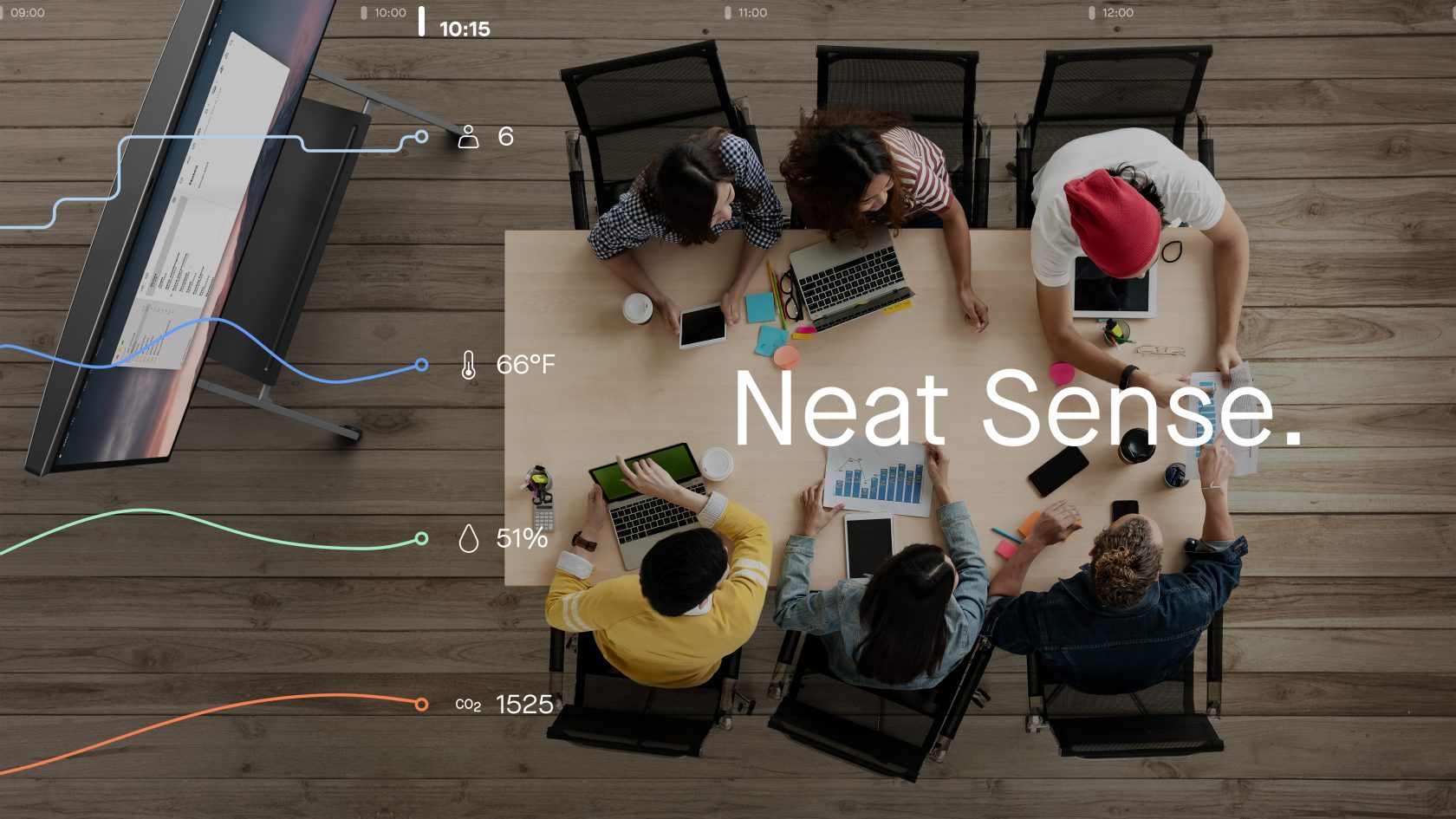
This is where Neat takes a different approach. Rather than treating room analytics as a separate workplace system, Neat has built environmental and occupancy intelligence directly into its devices through Neat Sense.
Available through Neat devices and accessible through Neat Pulse, Neat Sense continuously monitors workplace conditions and room usage, helping organizations better understand how their meeting spaces are performing. It provides visibility into metrics such as room occupancy, air quality, humidity, carbon dioxide (CO₂) levels, volatile organic compounds (VOCs), ambient noise, and lighting conditions. This creates a more complete picture of the meeting environment than room booking or occupancy data alone.
These insights can help organizations answer important workplace questions:
- Are meeting rooms being used as intended?
- Are collaboration spaces appropriately sized for demand?
- Is poor air quality affecting employee comfort and productivity?
- Are environmental conditions supporting effective collaboration?
- Which spaces may benefit from redesign or reconfiguration?
Because Neat Sense data is integrated directly into the collaboration devices employees already use every day, organizations can gather workplace intelligence without deploying separate room sensors or monitoring systems. The data can then be accessed through Neat Pulse, providing both real-time and historical insights that help workplace, facilities, and IT teams make more informed decisions.
As organizations continue to optimize office space for hybrid work, conference room analytics will increasingly extend beyond room utilization alone. Understanding occupancy patterns, environmental conditions, and workspace performance together can help create healthier, more productive, and more efficient meeting environments. Neat Sense helps organizations bring those insights into a single collaboration ecosystem.
Perhaps it’s time to book a demo and experience them for yourself.
Frequently asked questions
What are conference room analytics?
Conference room analytics are data and insights related to meeting room usage, occupancy, scheduling patterns, workplace performance, and collaboration behaviors.
What metrics should organizations track?
Common metrics include occupancy rates, room utilization, meeting duration, no-show meetings, peak usage times, room availability, environmental conditions, and technology adoption.
How do conference room analytics improve meetings?
Analytics help organizations identify inefficiencies, optimize room allocation, improve scheduling practices, and create better meeting experiences for employees.
What is room utilization?
Room utilization measures how frequently a meeting space is used compared to its available capacity. It helps organizations understand whether meeting spaces are being used effectively.
How do analytics support hybrid work?
Analytics provide visibility into workplace usage patterns, helping organizations make informed decisions about space planning, collaboration technology, and employee experience initiatives.
Can AI improve workplace analytics?
Yes. AI can help identify trends, predict future demand, generate recommendations, and uncover insights that may be difficult to detect through manual analysis alone.
How do I get started with conference room analytics?
Start by identifying business objectives, selecting a small number of meaningful metrics, and using the resulting insights to guide workplace decisions and improvements.
Sources
- Future of Work Research, JLL – https://www.jll.com/en/trends-and-insights/workplace
- Workplace Research and Insights, CBRE – https://www.cbre.com/insights/reports
- Digital Workplace Research, Gartner – https://www.gartner.com/en/digital-workplace
- International Facility Management Association (IFMA) – https://www.ifma.org/
- International WELL Building Institute – https://www.wellcertified.com/
- Corporate Real Estate Research, CoreNet Global – https://www.corenetglobal.org/