

A Complete Guide to the Next-Generation Workplace in 2026
Hayley Spooner, Aug 3, 2026

Key takeaways
- The next-generation workplace is built around flexibility, intelligent collaboration, and employee experience rather than a fixed office location.
- AI is helping remove friction from meetings by improving audio, video, automation, and collaboration.
- Organizations need secure, adaptable technology that can evolve alongside changing business requirements.
- Open collaboration platforms give businesses greater flexibility and help avoid vendor lock-in.
- Intelligent meeting spaces improve productivity while making hybrid collaboration more inclusive.
- The most successful workplaces invest in technology that adapts to people—not the other way around.
Introduction
The next-generation workplace is no longer a vision of the future—it’s already taking shape.
Today’s organizations are supporting employees who work from corporate offices, home offices, customer sites, and shared workspaces, often moving between locations throughout the week. As a result, the workplace is no longer defined by a single building. It’s defined by the experience employees have wherever work happens.
At the same time, artificial intelligence is transforming how people collaborate. Meeting technology can now automatically frame participants, optimize audio, summarize discussions, and reduce repetitive administrative work, allowing employees to focus on meaningful conversations instead of managing technology.
Flexibility has also become a business priority. Organizations want the freedom to choose the collaboration platforms, devices, and workflows that best meet their needs today while remaining adaptable as technology continues to evolve.
Underlying all of this is security. As AI becomes more deeply integrated into workplace technology, organizations need collaboration solutions that are designed with enterprise security, governance, and privacy in mind.
The next-generation workplace combines all of these elements into a single goal: creating work environments that are intelligent, flexible, secure, and designed around people.
This guide explores what defines the next-generation workplace in 2026, the technologies shaping modern collaboration, and how organizations can prepare for the future of work.
What is the next-generation workplace?
The next-generation workplace is an environment where people, technology, and AI work together seamlessly, regardless of where employees are located.
Unlike traditional offices that centered work around a physical location, the modern workplace is built around flexibility and choice. Employees can move between home, the office, and shared workspaces while enjoying a consistent collaboration experience.
Technology plays an important role, but it’s no longer the focus.
Instead, the goal is to create environments where technology fades into the background, allowing employees to communicate, share ideas, and collaborate naturally.
A next-generation workplace typically includes:
- Flexible hybrid workspaces.
- Intelligent meeting rooms.
- AI-powered collaboration tools.
- Wireless content sharing.
- Secure cloud-based management.
- Platform flexibility across multiple collaboration services.
- Workplace insights that help organizations optimize how spaces are used.
Rather than treating collaboration as something that happens only during meetings, the next-generation workplace supports continuous teamwork throughout the working day.
Why the workplace is changing
The modern workplace has evolved rapidly over the past few years, driven by changing employee expectations, advances in AI, and the need for organizations to remain flexible in an increasingly digital world.
Several trends are reshaping how businesses think about workplace technology.
AI is transforming collaboration
Artificial intelligence is no longer an experimental feature.
It’s becoming a fundamental part of everyday work.
Modern collaboration platforms increasingly use AI to improve meeting experiences by:
- Optimizing camera framing.
- Enhancing audio quality.
- Reducing background noise.
- Capturing meeting notes.
- Generating action items.
- Automating routine administrative tasks.
Rather than replacing people, AI removes friction, allowing employees to spend more time collaborating and solving problems.
Employees expect flexibility
The workplace is no longer defined by a single location.
Employees increasingly expect the freedom to choose where they work while maintaining access to the same collaboration tools and meeting experiences.
Organizations that support flexible work are better positioned to attract talent, improve employee satisfaction, and adapt to changing business needs.
This shift also means meeting spaces need to support a variety of working styles rather than being designed for one fixed way of working.
Security has become a strategic priority
As organizations adopt AI-powered workplace technologies, security is becoming increasingly important.
Modern collaboration platforms need to protect not only devices and networks but also organizational data, identities, and AI-driven workflows.
Rather than treating security as a separate IT function, leading organizations are building it into every layer of the workplace, helping employees collaborate confidently while maintaining strong governance and compliance.
Collaboration happens everywhere
Work no longer begins when employees walk into a meeting room.
Conversations continue across offices, home workspaces, customer locations, and mobile devices throughout the day.
The next-generation workplace supports this continuous flow of collaboration by making it easy for employees to move between locations without disrupting how they communicate or share information.
8 characteristics of the next-generation workplace
The most successful organizations aren’t simply adopting new technology—they’re creating environments that help people collaborate more effectively.
1. Flexibility is built into every workspace
Modern organizations need technology that can evolve alongside their business.
Rather than locking themselves into a single collaboration platform or workflow, many businesses are prioritizing flexible solutions that allow them to adapt as requirements change.
This flexibility extends beyond software.
Meeting rooms, personal workspaces, and shared collaboration areas should all support multiple ways of working, giving employees the freedom to choose the tools and environments that help them be most productive.
A flexible workplace is also more resilient, allowing organizations to respond quickly as new technologies and working practices emerge.
2. AI removes friction instead of adding complexity
The most valuable AI is often the AI employees don’t notice.
Rather than requiring users to learn new workflows, intelligent collaboration technology works quietly in the background.
AI can automatically:
- Frame meeting participants.
- Improve audio quality.
- Reduce background noise.
- Optimize camera views.
- Capture meeting notes.
- Summarize discussions.
By automating routine tasks, AI allows meetings to feel more natural while reducing the administrative work that often follows them.
3. Security is built into the collaboration experience
Security is no longer something that happens behind the scenes.
It has become an essential part of how organizations evaluate workplace technology.
As AI becomes more deeply integrated into collaboration platforms, businesses need confidence that their data, conversations, and workflows remain protected.
That means choosing solutions that support strong governance, secure device management, regular software updates, and enterprise-grade security without creating unnecessary complexity for users.
When security is built into the collaboration experience from the beginning, organizations can embrace innovation with greater confidence.
4. Collaboration becomes platform-agnostic
Employees increasingly work across multiple collaboration platforms depending on customer requirements, business units, or regional preferences.
The next-generation workplace supports this flexibility by allowing organizations to choose the platforms that best meet their needs rather than being tied to a single ecosystem.
Platform-agnostic collaboration also helps future-proof workplace investments.
As technology evolves, organizations can continue adopting new tools without replacing their entire meeting room infrastructure.
5. Meeting rooms become intelligent
Meeting rooms are evolving from static spaces into intelligent collaboration environments.
Instead of relying on participants to adjust cameras, microphones, or room settings throughout a meeting, modern meeting technology automatically responds to what’s happening in the room.
Intelligent meeting rooms can:
- Detect room occupancy.
- Automatically frame participants.
- Optimize audio based on where people are speaking.
- Adapt camera views as conversations move around the room.
- Monitor environmental conditions.
- Help ensure remote participants remain engaged throughout the meeting.
The result is a more natural collaboration experience where technology quietly supports the meeting instead of becoming another task to manage.
6. Employee experience drives technology decisions
The most successful organizations no longer choose workplace technology based solely on technical specifications.
Instead, they ask a much simpler question:
“Does this make collaboration easier?”
Employees expect workplace technology to feel intuitive, reliable, and consistent whether they’re joining a meeting from home, a conference room, or another office.
When collaboration technology works seamlessly, employees spend less time troubleshooting and more time contributing ideas, solving problems, and making decisions.
This focus on employee experience also improves technology adoption, helping organizations gain greater value from their workplace investments.
7. IT teams gain centralized visibility
As organizations expand their collaboration technology across multiple locations, managing devices individually quickly becomes impractical.
Cloud-based management platforms allow IT teams to monitor meeting rooms remotely, deploy software updates, identify potential issues, and maintain consistent experiences across every office.
Centralized management helps organizations:
- Reduce downtime.
- Improve device reliability.
- Deploy updates more efficiently.
- Standardize meeting experiences.
- Scale collaboration technology more easily.
Rather than reacting to problems after they occur, IT teams can proactively manage meeting spaces and maintain high-quality collaboration experiences.
8. Technology continuously improves
The next-generation workplace is no longer built around hardware that remains unchanged for years.
Modern collaboration platforms continue to evolve through software updates, new AI capabilities, and cloud-based services that introduce new functionality over time.
This allows organizations to benefit from ongoing innovation without replacing existing hardware every time new capabilities become available.
Continuous improvement also helps businesses remain flexible as collaboration technology and workplace requirements continue to evolve.
Next-generation workplace checklist
Organizations preparing for the future of work should consider whether their workplace supports these core capabilities.
| Capability | Why it matters |
| Flexible collaboration | Supports employees wherever they work |
| AI-powered assistance | Reduces repetitive tasks and improves meeting experiences |
| Platform flexibility | Avoids vendor lock-in and supports changing business needs |
| Enterprise security | Protects users, devices, and organizational data |
| Intelligent meeting rooms | Creates more inclusive hybrid collaboration |
| Centralized device management | Simplifies IT administration across multiple locations |
Common mistakes organizations make
Creating a next-generation workplace isn’t about adding more technology—it’s about creating a better experience.
These are some of the most common mistakes organizations should avoid.
Buying technology instead of solving problems
New technology should simplify collaboration, not introduce additional complexity.
Every workplace investment should improve how people work together.
Treating AI as a standalone feature
The most effective AI works quietly in the background.
Organizations should focus on solving real collaboration challenges rather than adopting AI simply because it’s new.
Ignoring security and governance
As AI becomes more deeply integrated into workplace technology, organizations need to consider security, privacy, governance, and compliance from the very beginning.
Locking into a single ecosystem
Technology should support business flexibility.
Choosing open, adaptable solutions allows organizations to evolve as workplace requirements change.
Designing only for office-based employees
Modern workplaces need to create equitable experiences for employees wherever they choose to work.
Technology should support collaboration across every location—not just inside the office.
Trends shaping the workplace beyond 2026
The workplace will continue evolving as AI, automation, and intelligent collaboration technologies become more deeply integrated into everyday work.
Several trends are likely to shape the years ahead.
AI-native collaboration
AI will increasingly become part of every meeting, helping employees prepare for conversations, capture knowledge, summarize discussions, and automate routine tasks.
Intelligent workplaces
Meeting spaces will become increasingly aware of occupancy, environmental conditions, and user behavior, allowing technology to adapt automatically throughout the day.
Greater workplace flexibility
Organizations will continue investing in technologies that support multiple collaboration platforms, changing workplace strategies, and evolving employee expectations.
Security by design
Rather than adding security after deployment, organizations will increasingly prioritize workplace technologies that are secure from the outset, particularly as AI becomes more deeply embedded into business workflows.
Continuous innovation
Cloud-managed collaboration platforms will continue introducing new capabilities through software updates, allowing workplaces to improve over time without requiring major hardware refreshes.
Where Neat fits in
The next-generation workplace depends on technology that is intelligent, flexible, secure, and designed around people rather than processes.
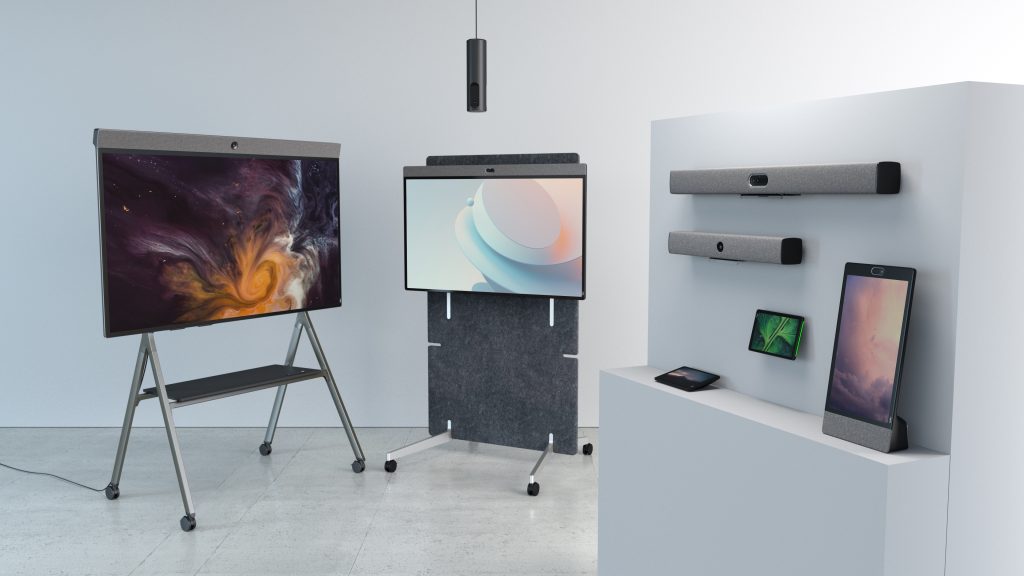
For meeting rooms of all sizes, Neat Bar Generation 2 combines intelligent cameras, adaptive microphone arrays, premium speakers, and AI-powered processing to create exceptional hybrid meeting experiences with minimal user interaction.
For larger collaboration spaces, Neat Center extends visibility beyond the front of the room, helping remote participants feel more connected by capturing conversations from every angle.
For interactive teamwork, Neat Board Pro brings together video conferencing, wireless content sharing, digital whiteboarding, and a large multi-touch display in a single all-in-one device designed for collaborative work.
Supporting every meeting are Neat Experiences, a suite of proprietary AI-powered technologies that continuously optimize framing, audio, and video to create more natural, equitable collaboration without requiring manual adjustments.
Organizations looking for greater flexibility can take advantage of Neat Open, allowing them to use the collaboration platforms that best meet their business needs while maintaining a consistent meeting experience across every workspace.
Behind the scenes, Neat Sense provides valuable occupancy and environmental insights, including room usage, temperature, humidity, air quality, and CO₂ levels. These insights help workplace teams make better decisions about how office space is used while supporting healthier work environments.
For IT teams, Neat Pulse delivers centralized cloud-based device management, making it easy to monitor devices, deploy software updates, and maintain consistent collaboration experiences across multiple offices.
Together, these solutions help organizations create workplaces that are more adaptable, easier to manage, and better prepared for the future of hybrid work and AI-powered collaboration.
Perhaps it’s time to book a demo and experience them for yourself.
Frequently asked questions
What is the next-generation workplace?
The next-generation workplace is an environment where people, AI, and collaboration technology work together seamlessly across offices, homes, and other work locations.
Why is the workplace changing?
Advances in AI, changing employee expectations, hybrid work, and the need for greater business flexibility are transforming how organizations design workplaces and collaboration experiences.
How is AI changing the workplace?
AI helps automate repetitive tasks, improve meeting quality, optimize audio and video, summarize discussions, and support more productive collaboration.
Why is workplace flexibility important?
Flexible workplaces allow organizations to adapt to changing business requirements while giving employees greater choice over where and how they work.
What makes a workplace future-ready?
Future-ready workplaces combine flexible collaboration, AI-powered technology, strong security, centralized management, and open platforms that can evolve alongside business needs.
Why are intelligent meeting rooms important?
Intelligent meeting rooms reduce friction by automating routine tasks, improving collaboration, and creating more equitable experiences for remote and in-room participants.
How can organizations prepare for the future of work?
Organizations should invest in adaptable technology, prioritize employee experience, strengthen security, embrace AI responsibly, and create workplaces that support collaboration regardless of location.
What role does security play in AI-powered workplaces?
Security is fundamental to protecting organizational data, identities, and AI-enabled workflows. Building security into workplace technology from the outset helps organizations adopt new innovations with confidence.
Sources
- What Security Looks Like in the AI Era | Neat | https://neat.no/stories/what-security-looks-like-in-the-ai-era/
- Open for More: Why Flexibility Is the New Infrastructure | Neat | https://neat.no/stories/open-for-more-why-flexibility-is-the-new-infrastructure/
- The Future of Jobs Report 2025 | World Economic Forum | https://www.weforum.org/reports/the-future-of-jobs-report-2025/
- State of AI in Early 2025 | McKinsey & Company | https://www.mckinsey.com/capabilities/quantumblack/our-insights/the-state-of-ai
- AI Risk Management Framework (AI RMF 1.0) | National Institute of Standards and Technology (NIST) | https://www.nist.gov/itl/ai-risk-management-framework