

7 Equipment Upgrades for Small Conference Rooms
Hayley Spooner, Jun 22, 2026
Key takeaways
- Small conference rooms now play a central role in hybrid work and video collaboration.
- In 2026, organizations increasingly prioritize simple, all-in-one conferencing systems over complex Audio Visual (AV) setups.
- Audio quality often has a bigger impact on meeting experience than camera quality alone.
- Features powered by Artificial Intelligence (AI), like auto-framing, speaker tracking, and intelligent audio are becoming standard in modern meeting rooms.
- The best small conference room upgrades improve usability, meeting equity, and long-term scalability.
Quick answer: What equipment upgrades matter most for small conference rooms?
The most valuable small conference room upgrades typically include better video conferencing systems, improved microphones and speakers, larger 4K displays, wireless content sharing, intelligent cameras, stronger networking, and simplified room controls.
In 2026, many organizations are also investing in AI-powered collaboration features that improve hybrid meeting experiences and reduce meeting friction.
The best upgrades are usually the ones that make meetings feel easier, faster, and more inclusive for both remote and in-room participants.
Why small conference rooms matter more in 2026
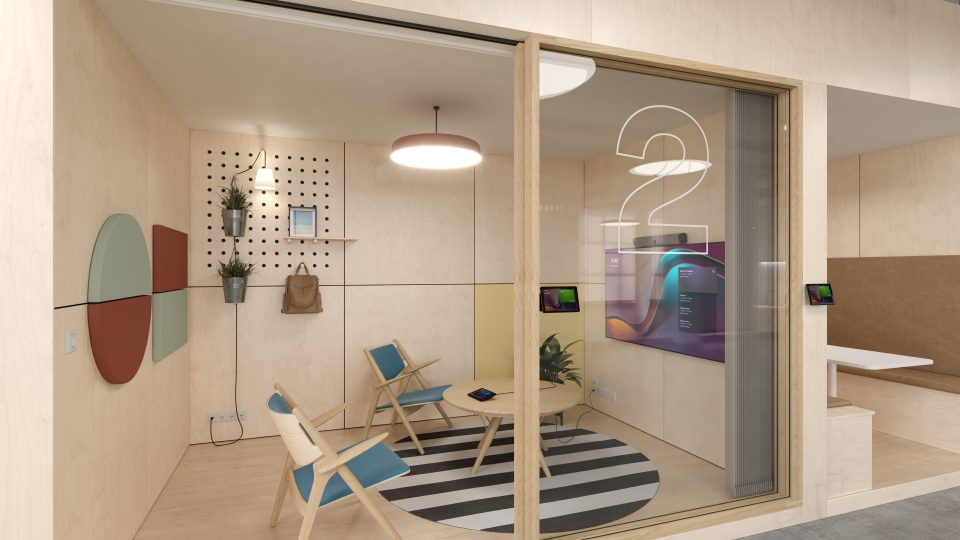
Small conference rooms and huddle spaces have become some of the most heavily used collaboration areas in modern offices.
As hybrid work continues evolving, organizations are redesigning workplaces around collaboration rather than individual desk work. That has increased demand for smaller meeting spaces that support quick video calls, project discussions, customer meetings, and hybrid teamwork.
At the same time, employee expectations around meeting quality have risen significantly. People increasingly expect conference rooms to work instantly, with reliable audio, intelligent video, wireless sharing, and simple controls that require little or no setup time.
Modern conferencing platforms now support AI-powered features like intelligent framing, speaker tracking, automated summaries, and live transcription. These capabilities are changing how organizations think about conference room design and the technology needed to support modern collaboration.
The good news is that small conference rooms are often easier and more cost-effective to upgrade than large boardrooms while still delivering major improvements to employee experience.
1. Upgrade to an all-in-one video conferencing system
One of the biggest trends in 2026 is the shift toward appliance-based conferencing systems for small meeting rooms.
Traditional conference room setups often relied on separate cameras, microphones, speakers, mini PCs, touch panels, and cable-heavy AV systems. While these environments could work well, they also introduced complexity, support overhead, and inconsistent user experiences.
Modern all-in-one systems combine cameras, microphones, speakers, and compute into integrated devices designed specifically for hybrid collaboration. This helps simplify deployment, reduce cable clutter, streamline software updates, and create more consistent meeting experiences across offices.
Organizations increasingly prioritize simplicity because employees expect meetings to start instantly without troubleshooting room technology.
For small rooms in particular, all-in-one systems often provide the best balance between performance, simplicity, and long-term manageability.
2. Improve conference room audio quality
Poor audio remains the single biggest cause of frustrating meetings.
Many organizations still focus heavily on upgrading cameras while underestimating how much audio quality affects collaboration. In reality, employees can tolerate imperfect video more easily than unclear sound.
Small meeting rooms frequently struggle with:
- Echo
- Background noise
- Muffled voices
- Uneven microphone pickup
- HVAC interference
Common small room audio issues
| Audio issue | Common cause |
| Echo | Hard surfaces and poor acoustics |
| Muffled speech | Weak microphone coverage |
| Background noise | Open office environments |
| Inconsistent volume | Poor speaker placement |
| Audio dropouts | Weak network performance |
Modern conferencing systems increasingly use AI-powered noise suppression, beamforming microphones, and intelligent voice tracking to improve audio clarity automatically.
For many organizations, improving audio quality has a greater impact on meeting experience than upgrading displays or cameras alone.
3. Add a larger 4K display
Many small conference rooms still rely on undersized displays that make remote participants difficult to see clearly.
As hybrid meetings become more collaborative, larger 4K displays are increasingly becoming the standard because they improve participant visibility, presentation clarity, shared content readability, and overall meeting engagement.
For most small conference rooms, organizations now typically use:
- 55–65-inch displays for huddle spaces
- 65–75-inch displays for slightly larger meeting rooms
The move toward larger displays is also being driven by AI-powered meeting layouts and gallery views, which require more screen space to keep participants visible simultaneously.
Recommended display sizes for small rooms
| Room type | Recommended display size |
| Huddle room | 55–65 inches |
| Small meeting room | 65–75 inches |
| Collaboration room | 65-inch+ interactive display |
Many businesses are also moving toward dual-display setups in medium spaces to keep remote participants visible alongside shared content.
4. Invest in intelligent cameras with AI features
AI-powered conferencing cameras have become one of the biggest trends shaping meeting room upgrades in 2026.
Modern systems increasingly support intelligent framing, speaker tracking, smart composition, participant grids, and automatic zoom adjustments. These capabilities improve meeting equity by helping remote participants see everyone clearly rather than viewing the room from a static wide-angle perspective.
AI-driven framing and speaker tracking are becoming especially important in hybrid environments where organizations want remote employees to feel equally included in conversations.
For small conference rooms, intelligent cameras can significantly improve meeting quality without requiring complex multi-camera AV systems.
5. Upgrade wireless content sharing
Employees increasingly expect to walk into a room and share content instantly without cables or adapters.
Wireless presentation systems help reduce meeting friction by allowing participants to share presentations, spreadsheets, documents, whiteboards, and browser windows directly from their devices.
This is particularly important in hybrid meetings where teams may switch rapidly between presenters, remote participants, and collaborative content.
Modern conferencing environments increasingly prioritize:
- Wireless sharing
- Bring Your Own Device (BYOD) flexibility
- Platform interoperability
- One-touch presentation workflows
Organizations are moving toward more flexible collaboration spaces where employees can connect easily regardless of device or conferencing platform.
6. Improve room acoustics and lighting
Sometimes the best conference room upgrades are not technology upgrades at all.
Poor acoustics and bad lighting can undermine even premium conferencing systems. Small rooms with hard walls, glass surfaces, and exposed ceilings often create echo and poor speech clarity.
Similarly, poor lighting can reduce camera quality and make participants appear shadowed or difficult to see clearly during meetings.
Simple improvements can have a major impact, including:
- Acoustic wall panels
- Carpet or soft flooring
- Better overhead lighting
- Reduced glare
- Improved seating layouts
The best hybrid meeting rooms balance technology, acoustics, lighting, and usability together rather than treating them as separate considerations.
7. Standardize room technology across the office
One of the biggest long-term improvements organizations can make is standardization.
Using completely different conferencing systems in every room often creates user confusion, more support tickets, inconsistent meeting experiences, and higher operational complexity.
Organizations increasingly standardize:
- Conferencing platforms
- Displays
- Room controllers
- Video systems
- Audio devices
- Room layouts
This creates more predictable meeting experiences while simplifying deployment, training, updates, and long-term support.
In 2026, many businesses now treat meeting rooms as scalable workplace infrastructure rather than individually customized AV projects.
How AI is changing small conference rooms
Artificial intelligence is rapidly reshaping small meeting room technology.
Modern conferencing systems increasingly support intelligent framing, automatic speaker tracking, live transcription, AI-generated summaries, occupancy analytics, and voice enhancement features.
These capabilities improve:
- Meeting accessibility
- Collaboration quality
- Employee productivity
- Hybrid meeting experiences
At the same time, organizations increasingly expect meeting rooms to feel frictionless. The trend across conferencing technology is moving toward systems that automate more of the meeting experience while reducing complexity for employees.
Common small conference room upgrade mistakes
Many organizations still overcomplicate small meeting room deployments.
Some of the most common mistakes include:
- Prioritizing video over audio
- Choosing overly complex AV systems
- Ignoring acoustics
- Using displays that are too small
- Failing to standardize rooms
- Overlooking device management
The most effective meeting room upgrades are usually the simplest ones.
Small conference room upgrade checklist
Organizations upgrading small conference rooms should evaluate:
- Audio quality
- Display size
- Camera intelligence
- Wireless sharing
- Network reliability
- Platform compatibility
- Room acoustics
- Device management
- Ease of use
- Long-term scalability
The best small meeting rooms are the ones employees can use instantly without technical assistance.
Where Neat fits in
Small conference rooms have become some of the most important collaboration spaces in modern workplaces, and organizations are increasingly looking for technology that is powerful without being complicated.
Neat helps organizations create better hybrid meeting experiences through appliance-based collaboration systems designed for modern meeting rooms. As businesses redesign offices around hybrid work, many teams are prioritizing solutions that simplify deployment, reduce support overhead, and create consistent experiences across every meeting space.
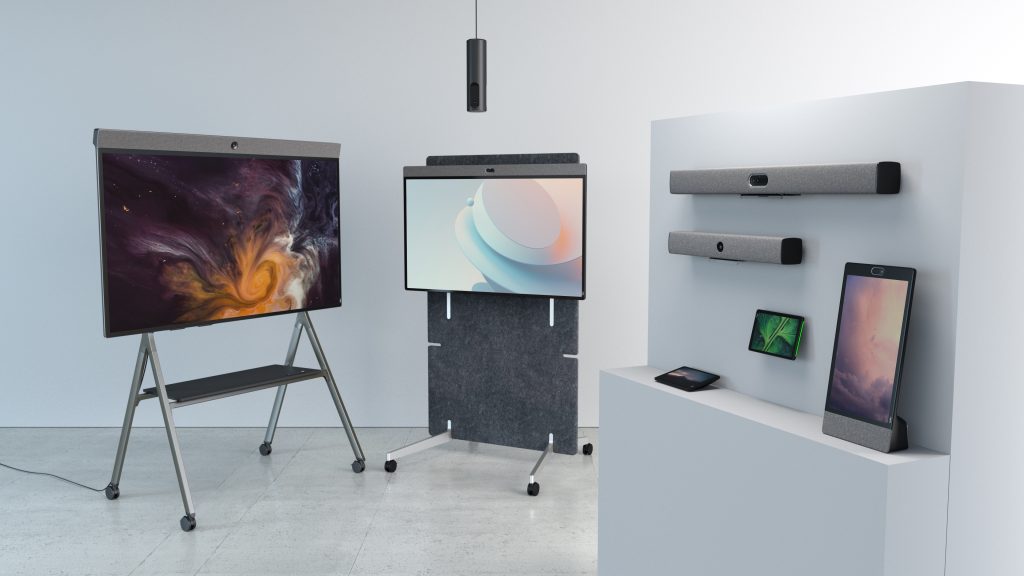
Neat devices combine cameras, microphones, speakers, and compute into integrated conferencing systems built for Zoom and Microsoft Teams environments. This appliance-based approach can help organizations streamline conference room upgrades while supporting high-quality audio, intelligent video, and AI-powered collaboration features.
Neat solutions are commonly used in:
- Huddle rooms
- Small conference rooms
- Flexible collaboration spaces
- Executive offices
- Medium meeting rooms
The broader trend across workplace technology is clear: organizations are prioritizing simplicity, usability, and scalability over increasingly complex AV deployments. The most successful conference room upgrades focus on creating spaces that employees can use instantly, whether participants are in the room or joining remotely.
As conferencing technology continues to evolve, businesses that invest in high-quality audio, intelligent video, standardized room experiences, and easy-to-manage systems will be better positioned to support productive hybrid collaboration for years to come.
Perhaps it’s time to book a demo and experience them for yourself.
Frequently asked questions
What is the best video conferencing setup for a small conference room?
For most small conference rooms, all-in-one conferencing systems with integrated cameras, microphones, speakers, and compute provide the best balance between simplicity and performance.
What size display is best for a small meeting room?
Most huddle rooms use 55–65-inch displays, while slightly larger small conference rooms often benefit from 65–75-inch screens.
Are AI-powered conferencing features worth it?
Yes. Features like intelligent framing, speaker tracking, and noise suppression can significantly improve hybrid meeting experiences.
What matters more: audio or video quality?
Audio quality usually has a bigger impact on overall meeting experience because poor sound immediately affects every participant.
Why do small conference rooms often perform poorly?
Most issues involve poor acoustics, weak networking, inconsistent room setups, or overly complicated technology.
Sources
- AVNetwork — Trends 2026: Pro AV Hangs Tough
https://www.avnetwork.com/news/trends-2026-pro-av-hangs-tough - Toucan Solutions — What to Look for in a Video Conferencing System in 2026
https://www.toucansolution.co.uk/blogs/news/what-to-look-for-in-a-video-conferencing-system-in-2026 - Reuters — Zoom Raises Annual Forecasts, Banks on AI Features to Drive Demand
https://www.reuters.com/business/zoom-raises-annual-forecasts-banks-ai-features-drive-demand-2026-05-21/