

Modern Conference Room Ideas: 10 Ways to Design Better Hybrid Meeting Spaces in 2026
Hayley Spooner, Jun 24, 2026
Key takeaways
- Modern conference rooms are designed around hybrid collaboration rather than in-person meetings alone.
- Meeting equity should be a core principle of conference room design.
- AI-ready technology is becoming a standard requirement in workplace collaboration spaces.
- Flexible layouts help organizations support a wider range of meeting types and work styles.
- Acoustics, lighting, and environmental conditions have a direct impact on meeting quality.
- Workplace analytics can help organizations optimize room usage and improve employee experience.
- Reducing meeting friction is becoming a key objective for workplace and IT teams.
- The most effective conference rooms balance technology, usability, and flexibility.
The role of the conference room has changed significantly in recent years.
Today’s workplaces must support a mix of in-person collaboration, remote participation, customer engagement, and team-based problem solving. As a result, conference rooms are no longer simply spaces where meetings take place. They have become critical environments for communication, decision-making, and workplace culture.
At the same time, employee expectations continue to evolve. People increasingly expect meeting spaces to be easy to use, comfortable to work in, and capable of supporting seamless collaboration regardless of location.
Research from JLL’s workplace research highlights the growing importance of workplace experiences that support flexibility, collaboration, and employee engagement.
This shift is forcing organizations to rethink what makes a conference room effective. The most successful meeting spaces are no longer defined solely by furniture or displays but by how well they support the needs of modern hybrid teams.
This guide explores ten modern conference room ideas that can help organizations create more engaging, productive, and future-ready meeting environments in 2026.
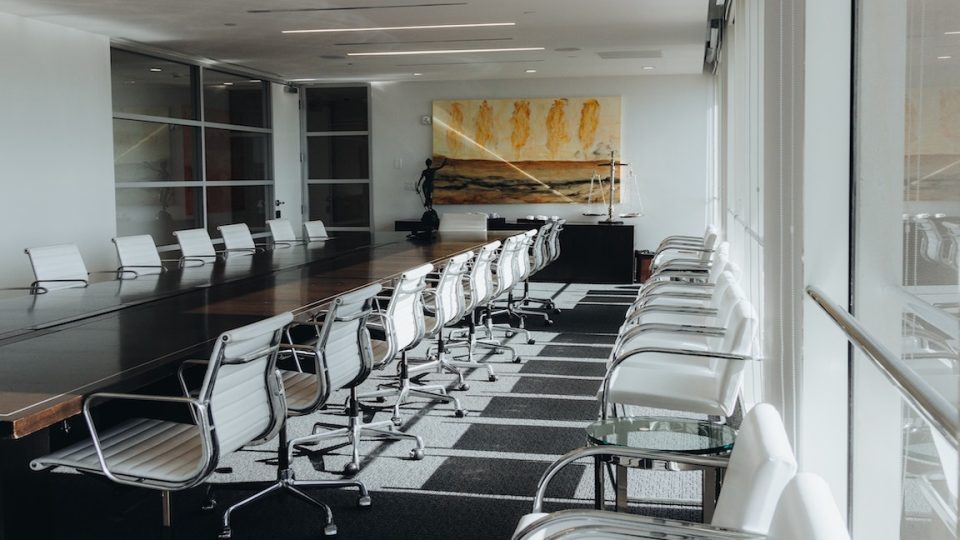
What makes a conference room modern in 2026?
A modern conference room is designed to support seamless collaboration between in-person and remote participants while providing the flexibility, technology, and workplace intelligence required by hybrid work.
Rather than focusing exclusively on physical design, modern meeting spaces bring together collaboration technology, room analytics, environmental considerations, and user experience principles to create better outcomes for employees.
The most effective conference rooms in 2026 typically share several characteristics:
- Hybrid-ready technology
- Flexible layouts
- Strong audio and video experiences
- AI-enabled collaboration tools
- Workplace analytics capabilities
- Simple and intuitive user experiences
- Environments that support employee wellbeing
The goal is to create a space where technology fades into the background and people can focus on meaningful collaboration.
Why conference room design matters more than ever
Organizations are investing heavily in workplace technology and office design, but not all meeting spaces deliver the same value.
Poorly designed conference rooms can create frustration, increase meeting delays, and make it harder for teams to collaborate effectively. In hybrid environments, these challenges are often amplified because remote participants are more likely to be affected by poor audio, inadequate camera coverage, or difficult room controls.
Conference room design also plays an important role in return-to-office strategies. As organizations encourage employees to spend more time in the office, meeting spaces must provide experiences that are difficult to replicate elsewhere.
Modern conference rooms should help organizations:
- Improve collaboration
- Support hybrid work
- Reduce meeting friction
- Increase employee engagement
- Improve workplace utilization
- Create more inclusive meeting experiences
The most successful workplaces recognize that conference room design is no longer just a facilities consideration—it’s a business and employee experience priority.
10 modern conference room ideas for hybrid teams
1. Design for meeting equity
Meeting equity means ensuring everyone can contribute effectively regardless of where they are joining from.
Remote participants should be able to see, hear, and engage with the conversation as naturally as those physically present in the room. This principle has become one of the most important considerations in modern conference room design.
2. Use integrated collaboration technology
Many organizations are replacing fragmented room setups with integrated collaboration solutions that combine cameras, microphones, speakers, and content-sharing capabilities into a single device.
Integrated technology often reduces complexity, improves reliability, and creates a more consistent user experience.
3. Create flexible room layouts
The modern workplace requires spaces that can adapt throughout the day.
A conference room may host a client presentation in the morning, a brainstorming session after lunch, and a hybrid team meeting in the afternoon. Flexible furniture and adaptable layouts help support these changing needs.
4. Make rooms AI-ready
Artificial Intelligence (AI) is becoming an increasingly important part of workplace collaboration.
Meeting summaries, transcription, speaker identification, intelligent framing, and knowledge retrieval capabilities are becoming standard features across collaboration platforms. Conference rooms should be designed to support these evolving workflows.
5. Improve room acoustics
Audio quality remains one of the most important factors influencing meeting success.
Acoustic panels, rugs, upholstered furniture, and thoughtful room design can significantly improve communication quality for both in-person and remote participants.
6. Prioritize lighting
Lighting affects everything from participant comfort to camera performance.
Natural light remains one of the most effective ways to improve meeting environments. Where natural light is limited, layered lighting can help create a more comfortable and professional experience.
7. Design around room purpose
Different meeting spaces support different activities.
A focus room, huddle room, boardroom, and workshop space each have unique requirements. Designing rooms around intended use often leads to better outcomes than applying the same technology and layout to every space.
8. Introduce workplace analytics
Modern conference rooms increasingly generate valuable workplace insights.
Analytics can help organizations understand room utilization, occupancy patterns, scheduling trends, and workplace performance. These insights support smarter decision-making and more effective workplace planning.
9. Reduce meeting friction
Meeting friction refers to the delays and disruptions that prevent meetings from running smoothly.
Complicated room controls, unreliable technology, poor connectivity, and difficult content sharing can all create unnecessary frustration. Modern conference rooms should remove these barriers and make collaboration as effortless as possible.
10. Focus on employee experience
Ultimately, conference rooms exist to support people.
The most effective meeting spaces prioritize comfort, usability, wellbeing, and collaboration rather than simply adding more technology. Organizations that focus on employee experience often see stronger engagement and better workplace outcomes.
Modern meeting room layouts for different types of work
Different types of work require different meeting environments.
Organizations that align room design with intended use are often better positioned to support a wide range of collaboration needs.
| Space type | Typical capacity | Best use case |
| Focus room | 1–2 | Private calls and focused work |
| Huddle room | 2–6 | Quick team collaboration |
| Small meeting room | 4–8 | Hybrid meetings and presentations |
| Boardroom | 8–20 | Leadership and client meetings |
| Workshop space | Flexible | Brainstorming and project work |
Creating a mix of room types allows organizations to support different work styles while making more efficient use of available office space.
Key conference room trends shaping workplaces in 2026
Meeting room design continues to evolve alongside workplace expectations.
Several trends are influencing how organizations approach conference room investments today.
AI-powered meetings
AI is helping automate note-taking, meeting summaries, action-item tracking, and collaboration workflows. As these capabilities mature, meeting spaces must be designed to support high-quality audio and video capture.
Workplace intelligence and analytics
Organizations increasingly rely on workplace data to understand how spaces are being used and where improvements can be made. Analytics are becoming an important part of workplace optimization strategies.
Flexible office design
As hybrid work patterns continue to evolve, organizations are prioritizing spaces that can adapt quickly to changing requirements.
Meeting equity
Creating inclusive experiences for remote participants remains a major workplace priority.
Sustainability and wellbeing
Organizations are paying greater attention to environmental factors that influence employee health, comfort, and productivity.
Research from The International WELL Building Institute (IWBI) continues to highlight the relationship between workplace environments and employee wellbeing.
Common conference room design mistakes to avoid
Even well-intentioned conference room projects can encounter challenges.
Some of the most common mistakes include:
- Designing primarily for in-room participants
- Ignoring acoustics
- Choosing technology that is difficult to use
- Using oversized rooms for small meetings
- Failing to collect room usage data
- Neglecting future workplace requirements
- Prioritizing features over user experience
The most successful conference rooms focus on enabling collaboration rather than showcasing technology.
Where Neat fits in
Modern conference rooms are no longer defined solely by displays, cameras, or furniture. Increasingly, they are becoming intelligent collaboration environments designed to support how people work, communicate, and make decisions.
Neat’s approach to meeting spaces is built around a simple principle: technology should enhance collaboration without adding complexity. Rather than requiring organizations to piece together multiple systems, Neat combines intelligent audio, video, and collaboration capabilities into experiences designed specifically for modern hybrid work.
As organizations increasingly adopt AI-powered workflows, flexibility is becoming just as important as functionality. Through Neat Open, organizations can choose the collaboration platforms, applications, and AI experiences that best fit their needs while maintaining a consistent meeting room experience. This flexibility allows businesses to adapt as workplace requirements evolve rather than being locked into a single approach.
AI is also becoming a foundational part of modern collaboration. From meeting summaries and transcription to intelligent search and workflow automation, organizations are increasingly looking for meeting spaces that can support new ways of working. Neat’s platform is designed to help organizations take advantage of these innovations while remaining adaptable to future developments in workplace AI.
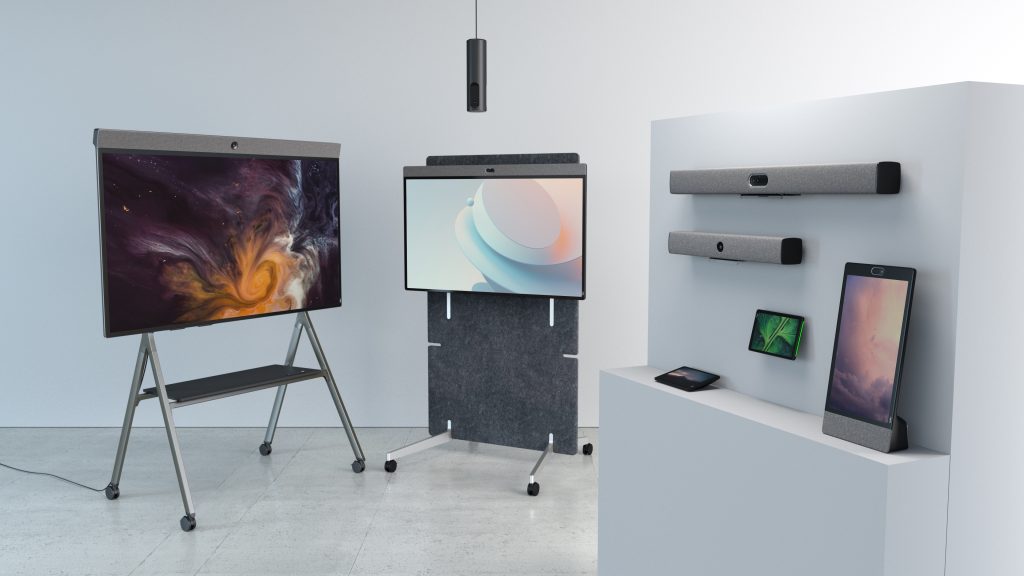
This philosophy extends across Neat’s portfolio. Neat Bar Generation 2 brings intelligent audio and video capabilities into a streamlined all-in-one solution designed for small and medium-sized meeting spaces.
Meanwhile, Neat Board 50 combines video conferencing, content sharing, and interactive collaboration in a single device, helping organizations support everything from hybrid meetings to creative workshops and brainstorming sessions.
For larger or more dynamic meeting environments, Neat Center acts as a companion device that helps remote participants see and hear everyone more clearly, improving context, engagement, and meeting equity.
Underlying these devices are Neat’s proprietary experiences and technologies, including intelligent framing, adaptive audio, and meeting equity features that continuously optimize the meeting experience. Rather than treating audio, video, and collaboration as separate systems, Neat brings them together into a cohesive platform designed to make meetings feel more natural and more inclusive.
As conference rooms continue to evolve into AI-enabled collaboration spaces, organizations need solutions that balance simplicity, flexibility, and innovation. By combining intelligent experiences, an open platform, and purpose-built collaboration devices, Neat helps organizations create meeting environments that are ready for both today’s hybrid workplace and tomorrow’s collaboration needs.
Perhaps it’s time to book a demo and experience them for yourself.
Frequently asked questions
What makes a conference room modern?
A modern conference room supports hybrid collaboration, provides high-quality audio and video experiences, incorporates flexible design principles, and helps create equitable meeting experiences for all participants.
How do you design a conference room for hybrid work?
Hybrid conference rooms should prioritize meeting equity, reliable collaboration technology, flexible layouts, strong acoustics, and intuitive user experiences that support both in-person and remote participants.
What technology should every conference room have?
Most modern conference rooms should include video conferencing capabilities, high-quality audio, wireless content sharing, collaboration software, and room management capabilities.
What is meeting equity?
Meeting equity refers to creating meeting experiences where all participants can contribute effectively regardless of whether they are attending in person or remotely.
How can conference rooms support employee wellbeing?
Factors such as lighting, acoustics, air quality, room comfort, and workspace design all influence employee wellbeing and meeting effectiveness.
Why are conference room analytics important?
Conference room analytics help organizations understand room utilization, occupancy patterns, workplace performance, and employee behavior, enabling more informed workplace decisions.
What is meeting friction?
Meeting friction refers to delays, interruptions, and usability issues that prevent meetings from running smoothly. Common examples include technology problems, difficult room controls, and connectivity issues.
How do I future-proof a conference room?
Focus on flexible design, scalable technology, AI-ready collaboration tools, workplace analytics capabilities, and solutions that can adapt as workplace requirements evolve.
Sources
- Workplace Design and Trends, JLL – https://www.jll.com/en/trends-and-insights/workplace
- Workplace Research and Insights, CBRE – https://www.cbre.com/insights/reports
- Conference and Meeting Room Design Ideas, Vanguard – https://vanguardcontracts.co.uk/blog/conference-and-meeting-room-design-ideas/
- Modern Conference Room Design for Flexible Workspaces, Dapapod – https://www.dapapod.com/blogs/news/modern-conference-room-design-for-flexible-workspaces
- International WELL Building Institute – https://www.wellcertified.com/
- The Future of Hybrid Meetings (Research Paper) – https://arxiv.org/abs/2205.04977