

Choosing the Right All-in-One Video Conference System: A How to Guide
Hayley Spooner, Jun 10, 2026

Key takeaways
- The best all-in-one video conference system is not necessarily the one with the longest feature list. It is the one that delivers a consistent, intuitive, and scalable collaboration experience.
- Organizations are increasingly evaluating video conferencing technology through the lens of workplace strategy rather than hardware specifications.
- Audio quality, capabilities powered by Artificial Intelligence (AI), ease of use, platform compatibility, and lifecycle management have become the most important buying considerations.
- Meeting equity is now a critical factor in technology selection, particularly for organizations operating hybrid work models.
- Simplicity often delivers more long-term value than complexity, especially when supporting multiple locations and hundreds of users.
- The most successful organizations standardize collaboration experiences while minimizing support burdens for IT teams.
Why video conferencing technology has become a workplace strategy
A decade ago, selecting a video conferencing system was largely a technology decision.
Organizations compared cameras, microphones, codecs, and pricing before selecting equipment for meeting rooms. Success was often measured by whether meetings could be conducted reliably and whether the technology functioned as expected.
Those days are gone.
In 2026, video conferencing technology sits at the center of how organizations communicate, collaborate, innovate, and make decisions. For many businesses, video has become the primary medium through which work happens.
Employees collaborate across multiple locations. Customers expect virtual engagement options. Leadership teams communicate with distributed workforces. Project teams routinely include participants working from home, headquarters, coworking spaces, and customer sites.
As a result, the quality of the collaboration experience now has a direct impact on productivity, employee engagement, customer relationships, and organizational performance.
This shift has fundamentally changed how businesses evaluate video conferencing technology.
The question is no longer: “Does this system support video meetings?”
The question is: “Will this system support how our organization works today and how we expect to work tomorrow?”
Organizations that answer that question effectively are far more likely to make technology investments that continue delivering value for years rather than becoming obsolete after a single hardware cycle.
What is an all-in-one video conference system?
An all-in-one video conference system combines cameras, microphones, speakers, processing capabilities, software integration, and collaboration features into a single device.
Historically, meeting rooms were built using multiple separate components sourced from different vendors. Cameras came from one provider. Audio equipment came from another. Control systems and compute devices often required additional integration.
While these environments could be powerful, they were also complex.
Deployment often required specialist expertise. Troubleshooting could be difficult. Software updates introduced risk. User experiences varied dramatically between rooms.
All-in-one systems emerged as a response to these challenges.
Rather than requiring organizations to assemble multiple technologies, these solutions provide a unified collaboration experience that is easier to deploy, manage, and use.
The popularity of all-in-one devices reflects a broader workplace trend.
Organizations increasingly prioritize simplicity, consistency, and reliability over technical complexity. They want meeting rooms that work immediately, require minimal training, and deliver the same experience regardless of location.
The best all-in-one systems accomplish exactly that.
Why traditional buying criteria no longer work
Many organizations still evaluate video conferencing systems using criteria that made sense ten years ago.
They compare camera resolution, field of view, microphone counts, and pricing. While these specifications remain relevant, they rarely determine whether employees will actually have a great meeting experience.
Workplace expectations have evolved.
Hybrid work has created new challenges that specifications alone cannot solve. Organizations now need technology that supports meeting equity, adapts to different room types, integrates with workplace platforms, and scales across distributed environments.
The reality is that employees rarely care about hardware specifications.
What they care about is whether meetings start on time, whether they can hear clearly, whether remote participants feel included, and whether the technology simply works when needed.
This shift has transformed buying priorities. Experience has become more important than specifications. Adoption has become more important than features. Consistency has become more important than complexity.
Organizations that continue evaluating solutions primarily through technical specifications often miss the factors that have the greatest impact on long-term success.
The five factors that matter most in 2026
While every organization has unique requirements, five considerations have emerged as the most important evaluation criteria for modern video conferencing systems.
| Factor | Why it matters |
| Audio Quality | Communication depends on clear speech and natural conversations |
| AI Capabilities | Improves meeting quality, engagement, and efficiency |
| Ease of Use | Drives adoption and reduces user frustration |
| Platform Compatibility | Ensures flexibility across collaboration ecosystems |
| Lifecycle Management | Reduces operational complexity and support costs |
These areas influence daily user experiences far more than many traditional hardware specifications.
Audio quality remains particularly important. Participants can often tolerate imperfect video without significantly affecting collaboration. Poor audio creates immediate friction and increases cognitive fatigue.
Artificial intelligence (AI) has become equally significant. Features such as intelligent framing, noise suppression, speaker tracking, occupancy awareness, and meeting analytics increasingly define how collaboration experiences feel rather than simply how they look.
Ease of use is another frequently overlooked factor.
The most advanced system in the world delivers little value if employees struggle to use it.
Successful deployments are often characterized by technology that disappears into the background and allows participants to focus entirely on the conversation.
Why meeting equity should influence every buying decision
One of the most important workplace concepts to emerge during the hybrid work era is meeting equity.
Historically, remote participants often experienced meetings differently from colleagues sitting in the room.
They struggled to hear side conversations. They missed visual cues. They found it difficult to contribute naturally. In many cases, they became passive observers rather than active participants.
Meeting equity seeks to eliminate these disparities.
The goal is to create collaboration experiences where every participant can engage effectively regardless of location.
This principle should influence every video conferencing purchase.
Organizations evaluating solutions should ask:
- Can remote participants hear everyone clearly?
- Does the camera create visibility for all attendees?
- Are in-room and remote participants represented equally?
- Does the technology encourage participation from everyone?
Artificial intelligence plays an increasingly important role here.
Intelligent framing, participant tracking, and advanced audio processing help ensure remote attendees remain connected to the discussion rather than feeling excluded from it.
As hybrid work continues to mature, meeting equity will become one of the defining measures of collaboration success.
The hidden cost of complexity
One of the most expensive mistakes organizations make is underestimating the cost of complexity.
Traditional Audio Visual (AV) environments often involve multiple vendors, separate management platforms, extensive integration requirements, and ongoing support challenges.
These systems may appear attractive during procurement because they offer extensive customization options.
However, complexity introduces hidden costs. IT teams spend more time troubleshooting. Employees require additional support. Software updates become more complicated. Room consistency becomes harder to maintain.
Over time, these operational costs often exceed any initial savings achieved during procurement.
The trend toward all-in-one systems reflects a growing recognition that simplicity has value.
Organizations increasingly prefer solutions that reduce variables, standardize experiences, and minimize operational burdens.
In many cases, simplicity delivers better long-term outcomes than highly customized environments.
How AI is reshaping video conferencing hardware
Artificial intelligence is arguably the most significant force shaping the future of video conferencing.
Its impact extends far beyond marketing buzzwords.
AI is fundamentally changing how collaboration technology functions.
Modern systems increasingly use AI to optimize participant experiences automatically. Cameras can identify speakers, adjust framing dynamically, and create more engaging visual experiences. Audio systems can isolate voices, suppress distractions, and improve clarity.
These capabilities improve meeting quality while reducing the need for manual intervention. The next phase of AI adoption will likely be even more transformative.
Organizations are already exploring technologies that provide meeting insights, workplace analytics, occupancy intelligence, and operational recommendations.
Rather than simply facilitating meetings, collaboration devices are becoming intelligent workplace platforms capable of generating meaningful business value.
This evolution means AI should no longer be viewed as a premium feature. It should be viewed as a core evaluation criterion.
What questions should you ask vendors?
Technology evaluations often focus heavily on products while paying insufficient attention to vendor capabilities.
Organizations should evaluate not only what a solution can do today but also how it will evolve over time.
| Question | Why it matters |
| How is AI incorporated into the platform? | Determines future value |
| What management tools are available? | Impacts operational efficiency |
| How frequently are features updated? | Reflects innovation pace |
| What platform certifications exist? | Supports interoperability |
| How does the roadmap align with workplace trends? | Protects long-term investments |
These conversations often reveal far more about a solution’s future potential than product specifications alone.
Where Neat fits in
As organizations increasingly prioritize simplicity, meeting equity, and intelligent collaboration experiences, integrated solutions have become central to workplace technology strategies.
Neat’s portfolio is designed around these priorities.
Rather than assembling multiple components and management tools, organizations can deploy purpose-built collaboration devices that combine premium audio, intelligent video, integrated compute capabilities, and native platform experiences within a single solution.
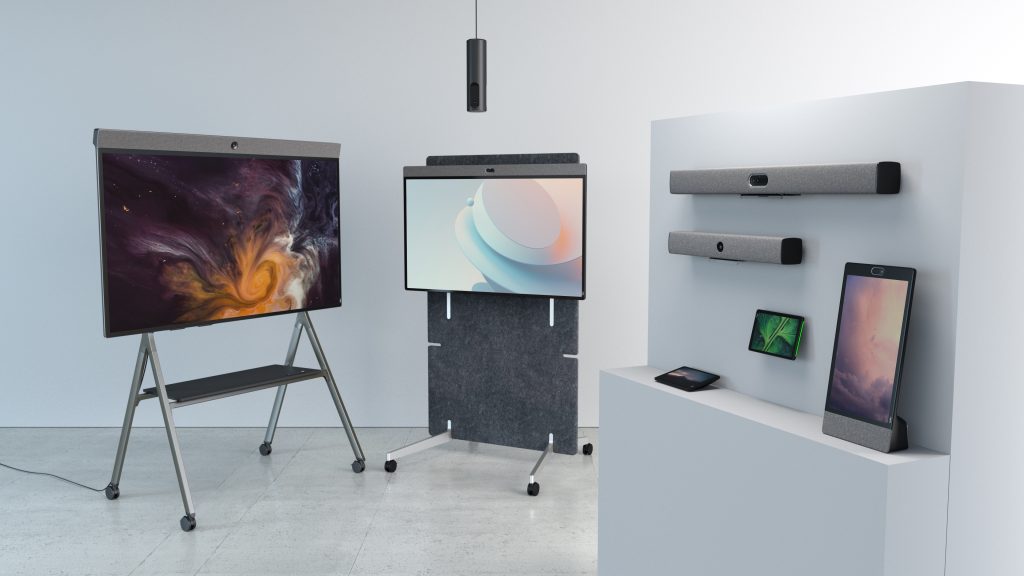
Products such as Neat Bar Generation 2, Neat Bar Pro, and Neat Board Pro are designed to support a wide range of collaboration environments while maintaining a consistent user experience.
This consistency is particularly important in hybrid workplaces where employees regularly move between meeting rooms, personal workspaces, home offices, and collaboration areas.
Neat’s focus on intelligent experiences aligns closely with broader workplace trends. AI-powered framing, advanced audio processing, and meeting equity capabilities help create more inclusive and engaging meetings without requiring additional effort from users.
For IT teams, Neat Pulse provides centralized visibility and device management capabilities that simplify deployment and ongoing administration across multiple locations.
As organizations continue investing in workplace transformation initiatives, solutions that combine simplicity, scalability, and intelligence are becoming increasingly attractive. Neat’s approach positions it strongly within this evolving landscape.
Book a demo or explore our range of devices today.
Frequently asked questions
What is an all-in-one video conference system?
An all-in-one video conference system combines cameras, microphones, speakers, processing capabilities, and collaboration features into a single integrated device.
Why are all-in-one systems becoming more popular?
Organizations increasingly value simplicity, consistency, and ease of management. All-in-one systems reduce deployment complexity while delivering reliable collaboration experiences.
What is the most important factor when choosing a video conferencing system?
Audio quality remains one of the most important factors because it directly influences communication effectiveness. However, AI capabilities, ease of use, and manageability are becoming equally important.
Why is meeting equity important?
Meeting equity helps ensure remote and in-room participants can contribute equally. This is particularly important in hybrid work environments.
How is AI changing video conferencing?
AI supports intelligent framing, noise suppression, participant tracking, meeting analytics, occupancy awareness, and other capabilities that improve collaboration experiences.
What should IT teams prioritize?
Organizations should prioritize centralized management, platform compatibility, security, scalability, and long-term vendor alignment.
Sources
- Microsoft Teams Rooms Documentation, Microsoft Learn: https://learn.microsoft.com/microsoftteams/rooms/
- Zoom Workplace Resources, Zoom: https://explore.zoom.us/en/workplace/
- Digital Workplace Research, Gartner: https://www.gartner.com
- Future of Work Research, IDC: https://www.idc.com
- Collaboration and Unified Communications Market Research, Frost & Sullivan: https://www.frost.com