

A Definition of Hot Desking: Plus How to Get Started and Tips for Success
Hayley Spooner, Jun 10, 2026

Key takeaways
- Hot desking is a workplace strategy where employees use available workstations instead of permanent assigned desks.
- In 2026, hot desking is less about reducing real estate costs and more about creating flexible, experience-led workplaces that support hybrid work.
- Successful hot desking programs rely on workplace technology, occupancy insights, desk booking tools, and thoughtful office design.
- The most effective workplaces combine hot desking with activity-based working, ensuring employees have access to the right spaces for the tasks they need to perform.
- Organizations that use workplace data to guide decisions typically achieve higher utilization rates, better employee experiences, and more effective workplace investments.
- Hot desking works best when flexibility is balanced with predictability, clear communication, and high-quality workplace technology.
What is hot desking?
Hot desking is a workplace arrangement where employees do not have permanently assigned desks. Instead, they use available workstations when they come into the office, either by selecting an open desk or reserving a space through a workplace booking system.
While the concept has existed for decades, hot desking has taken on a very different role in today’s workplace.
Historically, organizations often introduced hot desking as a way to reduce real estate costs. If fewer employees were in the office at the same time, fewer desks were needed. While that logic still applies, the conversation has evolved significantly.
In 2026, hot desking is increasingly viewed as part of a broader workplace strategy focused on flexibility, collaboration, and employee experience. Organizations are rethinking how offices function, why employees come into the workplace, and what types of environments best support modern work.
Rather than assigning a desk to every employee regardless of whether it is used, businesses are creating dynamic workplaces designed around how people actually work today.
Why the office is no longer a place people go every day
The rise of hot desking cannot be understood without understanding what has happened to the workplace itself.
For much of the modern office era, attendance was predictable. Employees arrived at roughly the same time each day, worked from the same desk, and left at similar times. Office design reflected these patterns.
That model no longer exists in many organizations.
Hybrid work has fundamentally changed attendance behavior. Employees now split their time between home offices, corporate offices, customer sites, and other locations. Some teams coordinate office attendance around collaboration days, while others use the workplace primarily for meetings, project work, and social connection.
As a result, many organizations discovered they were maintaining far more desks than they actually needed.
Workplace utilization studies consistently show that assigned desks often sit empty for large portions of the week. Meanwhile, meeting rooms, project spaces, and collaboration areas remain in high demand.
This shift has led organizations to ask a different question.
Rather than asking how many desks employees require, workplace leaders are increasingly asking how they can create environments that encourage employees to choose the office when it adds value.
That distinction is important.
The future of workplace strategy is not about reducing desks. It is about increasing the value employees receive when they come into the office.
Hot desking is one way organizations are responding to this challenge.
Hot desking vs. hoteling: Understanding the difference
The terms hot desking and hoteling are often used interchangeably, but they describe different workplace approaches.
| Hot desking | Hoteling |
|---|---|
| Employees select available desks | Employees reserve desks in advance |
| Often supports spontaneous attendance | Supports planned office visits |
| Greater flexibility | Greater predictability |
| Minimal planning required | Reservation system required |
| Best for dynamic environments | Best for structured attendance patterns |
Many organizations now combine elements of both.
For example, employees may reserve desks for designated team collaboration days while maintaining access to flexible seating for unplanned visits.
The right approach depends on attendance patterns, workplace culture, and employee preferences.
The benefits of hot desking
When implemented thoughtfully, hot desking delivers benefits that extend well beyond real estate optimization.
Better utilization of office space
The most obvious advantage is improved space efficiency.
Rather than maintaining a desk for every employee regardless of attendance patterns, organizations can align workplace capacity with actual demand. This allows businesses to make more effective use of office space while creating room for future growth.
Greater workplace flexibility
Employees increasingly expect flexibility in how and where they work.
Hot desking allows individuals to choose environments that support the work they need to complete. Someone focused on deep concentration may choose a quiet workspace, while a project team may sit together in a collaborative zone.
This flexibility reflects how modern work actually happens.
Increased collaboration
One of the less obvious benefits of hot desking is its potential to create new connections.
When employees are no longer tied to the same seat every day, they are more likely to interact with colleagues outside their immediate teams. These interactions often lead to knowledge sharing, relationship building, and collaboration opportunities.
Improved workplace agility
Business needs evolve constantly.
Hot desking enables organizations to adapt quickly to changes in team structure, workforce size, attendance patterns, and operational requirements without major workplace redesigns.
How many desks does your organization actually need?
One of the most common questions organizations ask when exploring hot desking is how many desks they should provide.
The answer depends on attendance patterns rather than headcount alone.
A useful starting point is to evaluate average daily occupancy.
| Average daily attendance | Recommended desk ratio |
|---|---|
| 40% | 1 desk per 2.5 employees |
| 50% | 1 desk per 2 employees |
| 60% | 1 desk per 1.7 employees |
| 70% | 1 desk per 1.4 employees |
| 80% | 1 desk per 1.25 employees |
These figures should be viewed as guidelines rather than strict rules.
Organizations should also account for factors such as team collaboration patterns, office peak days, visitor activity, and business growth plans.
Workplace analytics provide a far more accurate basis for planning than assumptions or industry averages.
Why some hot desking programs fail
Despite its popularity, hot desking is not universally successful.
Many unsuccessful programs share a common characteristic: they focus primarily on reducing desks rather than improving workplace experiences.
Employees often express concerns about:
- Finding available workspaces
- Locating colleagues
- Loss of personal space
- Inconsistent workstation setups
- Privacy challenges
- Reduced sense of belonging
These concerns are valid.
Organizations that introduce hot desking without addressing employee experience often encounter resistance and lower satisfaction levels.
Successful workplace transformations focus on creating environments people want to use rather than simply reallocating space.
The technology behind successful hot desking
Technology has become one of the most important enablers of modern hot desking.
The earliest implementations often relied on manual processes. Employees arrived, looked for available desks, and hoped they could find a suitable workspace.
Today’s workplace technology provides a far more sophisticated experience.
Modern hot desking strategies increasingly rely on:
- Desk booking platforms
- Workplace experience applications
- Occupancy sensors
- Space utilization analytics
- Digital wayfinding tools
- Collaboration technology
- AI-powered workplace forecasting
These solutions help employees locate colleagues, reserve workspaces, coordinate attendance, and navigate office environments more effectively.
At the same time, they provide organizations with valuable data about how space is actually being used.
This visibility enables workplace teams to make informed decisions rather than relying on assumptions.
The rise of workplace intelligence
Perhaps the most important development in workplace strategy is the growing use of workplace intelligence.
Organizations increasingly recognize that offices generate valuable operational data.
Occupancy sensors, booking systems, and workplace platforms can reveal:
- Which spaces are most popular
- Which days experience the highest attendance
- How teams collaborate
- Where capacity constraints exist
- How workplace investments are performing
Artificial intelligence is beginning to play an important role in this process.
Some workplace platforms can already forecast attendance patterns, recommend optimal space allocations, and identify opportunities for workplace improvements before issues arise.
The future of hot desking will be increasingly data-driven.
Rather than managing desks manually, organizations will use workplace intelligence to continuously optimize experiences based on how employees actually use the office.
Activity-based working: The evolution of hot desking
Many organizations now view hot desking as part of a larger workplace philosophy known as activity-based working.
This approach recognizes that different tasks require different environments.
Employees may need:
| Workspace type | Best for |
|---|---|
| Focus Areas | Deep concentration |
| Collaboration Spaces | Team projects |
| Meeting Rooms | Structured discussions |
| Phone Booths | Private conversations |
| Social Areas | Informal interaction |
| Shared Workstations | General office work |
Instead of designing offices around assigned seating, activity-based working designs workplaces around the activities employees perform.
This creates more adaptable environments while improving the overall workplace experience.
Where Neat fits in
As organizations embrace hot desking and flexible workplace strategies, technology consistency becomes increasingly important.
Employees moving between desks, focus areas, collaboration zones, and meeting rooms should not encounter completely different technology experiences throughout the day.
This is where collaboration technology plays a critical role.
Devices such as Neat Frame support individual video collaboration and focused work, while solutions like Neat Board Pro help transform shared collaboration spaces into dynamic environments for meetings, workshops, and project work.
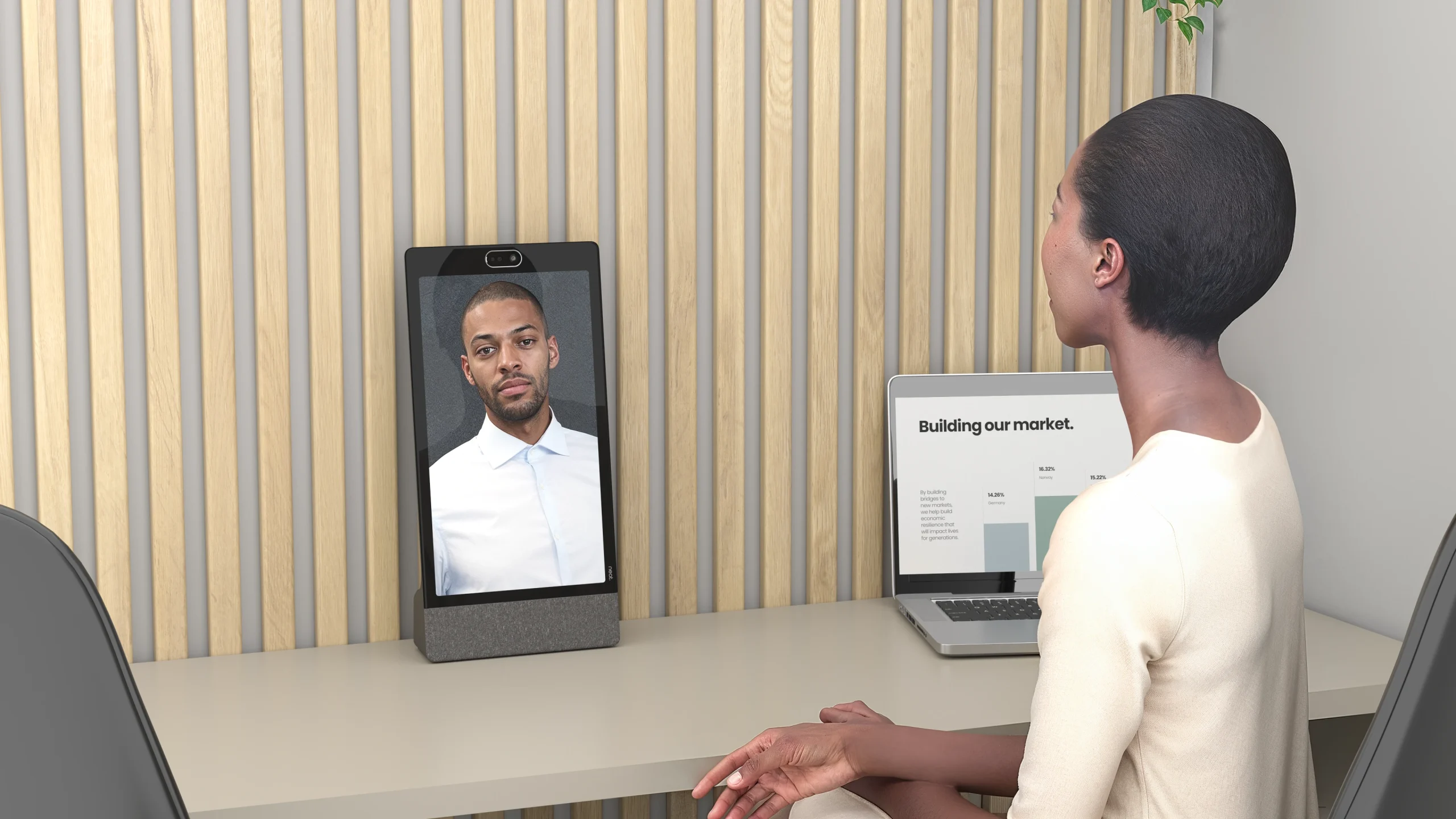
As employees move through increasingly flexible workplaces, consistent technology experiences help reduce friction and improve productivity.
For workplace and IT teams, Neat Pulse provides centralized visibility and device management capabilities that simplify administration across multiple locations and workspace types.
Ultimately, successful hot desking depends on more than desk allocation. It requires creating workplaces that support communication, collaboration, and flexibility wherever employees choose to work. Neat’s portfolio is designed to help organizations achieve exactly that.
Book a demo or explore our range of devices today.
Frequently asked questions
What is hot desking?
Hot desking is a workplace strategy where employees use available desks instead of being assigned permanent workstations.
Is hot desking the same as hoteling?
No. Hot desking typically involves choosing available desks, while hoteling relies on advance reservations.
What are the main benefits of hot desking?
Benefits include improved space utilization, greater workplace flexibility, increased collaboration, and reduced real estate costs.
Why do some employees dislike hot desking?
Common concerns include lack of personal space, difficulty locating colleagues, inconsistent workstation setups, and reduced workplace identity.
What technology supports hot desking?
Organizations commonly use desk booking platforms, occupancy sensors, workplace analytics tools, collaboration technology, and workplace experience applications.
Does hot desking work for every organization?
Not always. Some roles require dedicated equipment, enhanced privacy, or specialized work environments. Many organizations adopt a hybrid approach that combines assigned and flexible workspaces.
Sources
Hybrid Work Research, Gartner: https://www.gartner.com/en/human-resources/topics/hybrid-work
Future of Work Research, IDC: https://www.idc.com/promo/future-of-work
Global Workplace Trends and Occupancy Research, CBRE: https://www.cbre.com/insights/reports
Hybrid Work and Workplace Resources, Zoom: https://www.zoom.com/en/resources