

15 Video Camera Technology Trends for Remote Teams in 2026
Hayley Spooner, Jun 16, 2026

Key takeaways
- Intelligent camera systems are replacing static conference room setups
- Framing assisted by Artificial Intelligence (AI) and adaptive video experiences are becoming standard expectations
- Distributed camera architecture is improving meeting equity for remote participants
- Organizations increasingly prioritize simplicity, interoperability, and device management
- Video collaboration systems now focus on natural human interaction rather than visible technology
Remote and hybrid work are no longer temporary workplace models. They are now permanent operating environments that demand more natural, immersive, and intelligent collaboration experiences.
According to research from Microsoft, Zoom, Gartner, and McKinsey, organizations continue investing heavily in workplace collaboration technology as hybrid work becomes standard across industries. Employees increasingly expect seamless video experiences whether working from home, in flexible workspaces, or inside modern meeting rooms.
As a result, video camera technology has evolved far beyond basic webcams and traditional conference room cameras. In 2026, organizations are prioritizing systems that create adaptive collaboration experiences where technology fades into the background and meetings move naturally.
Today’s leading video collaboration environments combine intelligent framing, adaptive audio and video processing, distributed sensing, and platform-native experiences to help remote participants feel genuinely connected to the room.
This shift is transforming passive meeting spaces into thinking environments that sense, understand, and respond in real time.
What are the top video camera trends for remote teams in 2026?
The biggest video camera technology trends shaping remote and hybrid work in 2026 include:
- Multi-camera collaboration environments
- AI-assisted auto-framing
- Intelligent distributed architecture
- Meeting equity-focused design
- Adaptive audio and video processing
- Native Zoom and Microsoft Teams experiences
- Cloud-based device management
- Context-aware collaboration systems
- Flexible room coverage
- Immersive hybrid meeting experiences
Organizations are increasingly prioritizing collaboration technology that creates seamless and intuitive experiences where technology adapts so people don’t have to.
1. Multi-camera collaboration experiences
Single front-of-room cameras are no longer enough for modern hybrid collaboration.
Organizations are increasingly deploying multi-camera environments that provide multiple perspectives across the room. This helps remote participants see active speakers, side conversations, whiteboards, and in-room collaboration more naturally.
Compared to traditional single-camera conference rooms, distributed camera environments create more immersive collaboration experiences and improve meeting equity.
Distributed intelligence across the room enables cameras and microphones to work together dynamically rather than functioning as isolated devices.
The result is a more natural collaboration experience where remote attendees feel present rather than peripheral.
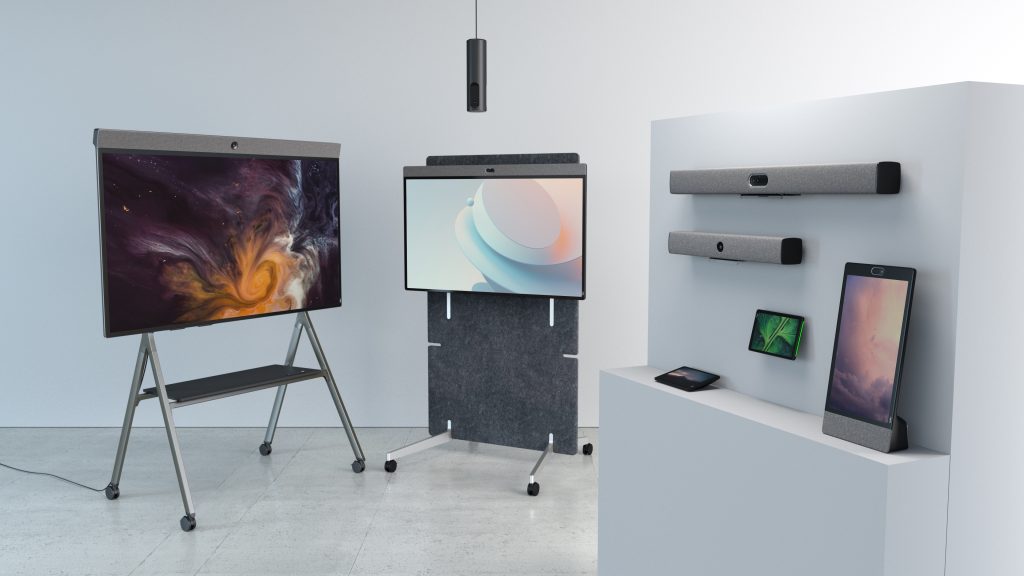
Solutions like Neat Center support this shift by extending video and audio coverage deeper into the room.
2. AI-assisted auto-framing becomes standard
How is AI changing conference room cameras?
One of the biggest developments is intelligent framing technology.
Auto-framing systems have evolved significantly since early speaker-tracking cameras. In 2026, modern camera systems continuously adapt to participant movement, room occupancy, and conversational flow in real time.
Instead of abrupt camera movements or delayed framing adjustments, newer systems create smoother and more natural transitions that keep meetings fluid and uninterrupted.
This allows collaboration to happen naturally without participants needing to think about the technology around them.
3. Meeting equity is driving camera design
What is meeting equity in hybrid work?
Meeting equity refers to creating collaboration experiences where remote participants can engage as naturally and effectively as people physically present in the room.
This has shifted camera technology priorities toward inclusivity rather than simply improving image quality.
Organizations now evaluate video conferencing devices based on how effectively they:
- Capture all participants clearly
- Balance visibility across the room
- Improve inclusivity during discussions
- Reduce remote participant fatigue
- Support natural interaction between in-room and remote attendees
Video systems that intelligently adapt to people and spaces are becoming essential in hybrid meeting rooms.
4. Intelligent distributed architecture is replacing centralized hardware
Traditional conference room technology often relied on single-device architectures that created blind spots and uneven collaboration experiences.
Modern meeting spaces increasingly use intelligent distributed architecture, where cameras, microphones, sensors, and collaboration devices work together throughout the room.
Compared to static collaboration systems, distributed environments improve:
- Video coverage
- Audio clarity
- Participant tracking
- Spatial awareness
- Flexibility across different room layouts
Distributed intelligence also simplifies scaling collaboration experiences across multiple workplace environments.
5. 4K video is now the baseline
In 2026, 4K resolution is no longer considered a premium feature for enterprise video conferencing.
High-resolution video has become the baseline expectation because it improves:
- Facial clarity
- Eye contact perception
- Whiteboard visibility
- Visual engagement
- Presenter visibility
As organizations invest in future-ready thinking environments, image quality must support natural communication without distraction.
6. Adaptive low-light optimization improves hybrid meetings
Remote meetings increasingly happen in flexible workspaces rather than carefully controlled conference rooms.
Advanced low-light optimization now uses real-time environmental analysis to automatically adjust exposure, color balance, and image processing based on room conditions.
This helps maintain professional-quality video experiences in:
- Open collaboration spaces
- Huddle rooms
- Home offices
- Multi-purpose environments
- Flexible workplace setups
The goal is consistency without requiring manual adjustments.
7. Camera intelligence is becoming more context-aware
Video collaboration technology is becoming increasingly aware of room dynamics.
Modern systems can now identify:
- Active speakers
- Group discussions
- Room occupancy
- Participant movement
- Conversational transitions
This contextual awareness helps meetings feel more natural while reducing the need for manual controls.
Technology adapts so people don’t have to.
8. Native platform experiences matter more than ever
What makes a good hybrid meeting room camera?
For many organizations, the answer starts with simplicity and interoperability.
Businesses increasingly prioritize video conferencing devices designed specifically for native Zoom Rooms and Microsoft Teams Rooms experiences.
This reduces:
- User friction
- IT complexity
- Training requirements
- Meeting startup delays
- Compatibility issues
Seamless interoperability has become a critical purchasing factor for workplace technology teams.
9. AI-enhanced audio and video Processing are working together
Video quality alone no longer defines collaboration experiences.
Modern conference room cameras increasingly combine intelligent video technology with adaptive audio processing to improve clarity across the entire interaction.
This includes:
- Noise suppression
- Echo reduction
- Directional voice pickup
- Speaker prioritization
- Real-time audio balancing
Together, audio and video intelligence create more immersive collaboration experiences for distributed teams.
10. Wide-angle coverage without distortion
Wide-angle cameras remain essential for hybrid meeting rooms, but image distortion has become a major focus area.
Newer camera systems use advanced image correction and computational video processing to preserve natural participant proportions even in smaller spaces.
This enables:
- Better room coverage
- More comfortable viewing experiences
- Improved visibility in compact meeting rooms
- Cleaner framing across flexible layouts
As organizations optimize smaller collaboration spaces, this trend continues to grow.
11. Device management and monitoring are strategic priorities
As organizations scale collaboration technology globally, IT teams need centralized visibility into device performance and room health.
Modern video conferencing systems increasingly include cloud-based management capabilities that support:
- Remote monitoring
- Software updates
- Device analytics
- Issue detection
- Fleet management
This simplifies administration while improving reliability across distributed workplaces.
Platforms like Neat Pulse reflect this growing demand for scalable workplace collaboration management.
12. Privacy-conscious camera technology is expanding
Organizations are paying closer attention to collaboration privacy and workplace data governance.
This is influencing how conference room camera systems are designed and deployed, including:
- Occupancy awareness controls
- Meeting boundary settings
- Secure device management
- Intelligent framing permissions
- User transparency features
As AI capabilities expand, organizations increasingly prioritize systems that balance intelligence with trust and simplicity.
13. Hybrid collaboration spaces are becoming more flexible
The traditional boardroom is no longer the center of workplace collaboration.
Organizations now support a broader range of meeting environments, including:
- Huddle spaces
- Open collaboration zones
- Focus rooms
- Hot desk environments
- Flexible touchdown spaces
Camera technology must adapt dynamically across varying room sizes, lighting conditions, and collaboration styles.
Flexibility has become a core design requirement for enterprise collaboration technology.
14. Immersive collaboration is replacing passive viewing
Remote participants no longer want to simply watch meetings happen.
Video collaboration technology is shifting toward immersive collaboration experiences where participants can engage naturally regardless of location.
This includes:
- More balanced framing
- Better room visibility
- Natural eye-line positioning
- Adaptive participant layouts
- Improved conversational flow
The objective is not just clearer video. It is more human collaboration.
15. Simplicity is becoming a competitive advantage
As collaboration technology becomes more advanced, the best systems increasingly feel invisible.
Organizations are moving away from overly complex meeting room technology in favor of solutions that:
- Start instantly
- Require minimal training
- Reduce setup friction
- Work consistently
- Adapt automatically
In 2026, simplicity is no longer basic functionality. It is a strategic advantage.
The most effective collaboration technology creates environments where people can focus entirely on conversation, creativity, and decision-making.
The future of video camera technology for remote teams
Video camera technology is no longer just about image quality.
The future of collaboration depends on environments that intelligently adapt to people, spaces, and workflows in real time.
As hybrid work continues evolving, organizations will increasingly invest in future-ready thinking environments that combine distributed intelligence, natural collaboration experiences, and seamless interoperability.
In 2026, the most effective video collaboration systems are designed around adaptability, meeting equity, distributed intelligence, and simplicity. Organizations are moving beyond standalone cameras toward intelligent collaboration environments that support more natural human interaction across every workspace.
The goal is simple: make remote collaboration feel as natural as being there in person.
Transforming passive rooms into thinking environments is no longer a future vision. It is already shaping how modern teams collaborate today.
Building future-ready collaboration spaces
Organizations evaluating video collaboration technology in 2026 should prioritize solutions that combine simplicity, intelligent adaptability, seamless interoperability, and scalable device management. The most effective collaboration environments are designed to support people first while allowing technology to operate naturally in the background.
Where Neat fits in
As video camera technology evolves toward more intelligent, adaptive, and immersive collaboration experiences, Neat is helping organizations transform passive meeting rooms into thinking environments. Rather than treating cameras, audio, and room systems as separate technologies, Neat’s intelligent distributed architecture is designed to create seamless and intuitive collaboration experiences that adapt in real time to people and spaces. From multi-camera room coverage with Neat Center to simplified device management through Neat Pulse, Neat helps businesses support meeting equity, reduce technology friction, and create future-ready collaboration environments where technology fades into the background and people remain the focus.
Book a demo or explore our range of devices today.
Frequently asked questions
What is the biggest video camera trend for remote teams in 2026?
The biggest trend is the move toward intelligent distributed collaboration systems that combine adaptive cameras, audio intelligence, and contextual awareness to create more natural hybrid meeting experiences.
Why are multi-camera systems becoming more popular?
Multi-camera environments improve meeting equity by helping remote participants see and engage with everyone in the room more naturally.
What should businesses look for in video collaboration technology?
Organizations should prioritize:
- Native platform compatibility
- Intelligent framing
- Audio quality
- Device management
- Scalability
- Ease of use
- Flexible room coverage
Why is meeting equity important in hybrid work?
Meeting equity ensures remote participants can contribute naturally and feel equally included during collaboration, regardless of location.
How is AI changing video conferencing technology?
AI increasingly supports real-time framing, contextual awareness, audio processing, room adaptation, and collaboration flow while helping technology remain unobtrusive.
What camera features are best for hybrid meetings?
The best hybrid meeting room cameras typically include intelligent framing, wide-angle coverage, adaptive low-light optimization, high-quality audio integration, and native conferencing platform support.
Are AI cameras worth it for conference rooms?
AI-assisted conference room cameras can improve meeting equity, reduce manual setup requirements, and create more natural collaboration experiences for remote and in-office participants.
What is intelligent framing in video conferencing?
Intelligent framing automatically adjusts camera views in real time to keep participants properly positioned and visible during meetings.
How do multi-camera meeting rooms work?
Multi-camera meeting rooms use distributed camera systems that work together to capture different perspectives across the room, improving visibility and engagement for remote participants.
What is distributed collaboration architecture?
Distributed collaboration architecture refers to meeting environments where cameras, microphones, sensors, and collaboration devices work together throughout the room rather than relying on a single centralized device.
What video conferencing technology is future-proof?
Future-ready collaboration technology should support adaptive experiences, native platform interoperability, scalable management, intelligent automation, and flexible deployment across different meeting spaces.
Sources
- Microsoft Work Trend Index 2025
https://www.microsoft.com/worklab/work-trend-index/ - Zoom Workplace Insights and Hybrid Work Research
https://explore.zoom.us/en/workplace/ - Cisco Hybrid Work Research and Collaboration Insights
https://www.cisco.com/c/en/us/solutions/hybrid-work.html - Gartner — Future of Work Trends
https://www.gartner.com/en/topics/future-of-work - IDC — Future of Connected Work Research
https://www.idc.com/promo/future-of-work - McKinsey & Company — Hybrid Work and Workplace Collaboration Insights
https://www.mckinsey.com/capabilities/people-and-organizational-performance/our-insights - Deloitte Insights — Workplace Technology and Collaboration Trends
https://www2.deloitte.com/us/en/insights/focus/human-capital-trends.html
- Frost & Sullivan — Unified Communications and Collaboration Research
https://www.frost.com/ - Microsoft Teams Rooms and Hybrid Meeting Research
https://www.microsoft.com/microsoft-teams/microsoft-teams-rooms - Zoom Rooms and Smart Collaboration Research
https://explore.zoom.us/en/products/zoom-rooms/